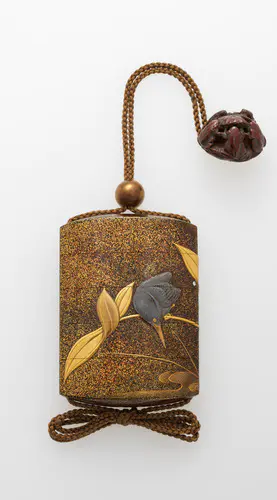
A rectangular box with four sections, decorated with a painted scene of a persimmon tree on a tawny ground, and carved with flowing water, black butterflies, and pearl oysters. The interior is made of gold leaf. The bottom center bears an inscription. Eric Verlbrugge Old Collection.
常形4段の印籠で、斑梨子地に研出蒔絵で流水を高蒔絵と白蝶貝の彫嵌で沢瀉に翡翠を表す。段内部は金梨子地。底部の中央下に作銘。エリック・ヴェルブラッジ旧蔵。
View the original at Japan Search →Article 1 describes the Ainu as the indigenous people of the northern part of the Japanese archipelago and of Hokkaido in particular, and cites international circumstances concerning indigenous peoples as a reason for acting. It requires the government to set a basic policy, and lets municipalities draw up regional plans for approval by the Prime Minister.
The cool part. The definition in Article 2 is the part to sit with. Ainu culture means the Ainu language, and the ways of living, music, dance, crafts and other cultural products inherited among the Ainu, and cultural products developed from these. That final clause refuses to freeze the culture at a date, and treats what is made next as equally the thing being protected. The Act then reaches into trademark law, reducing or waiving registration fees for regional collective trademarks used by approved projects.
Verify at e-Gov 法令検索 →Use it Palette for a single-colour run: one ink, heavy stock, nothing else on the sheet.
Description source: museum curator text, translated — not generated