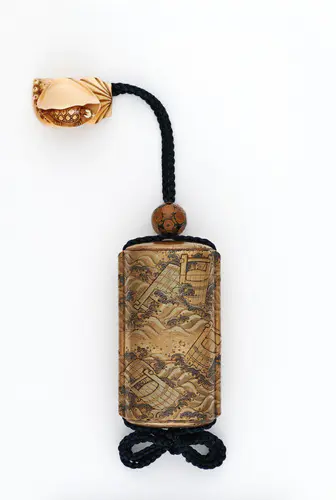
This is a Japanese box-shaped inkstand from the Edo period, with a dust-covered old atmosphere. It resembles an Edo inkstand, having a gold-powder inlay on the lid and a wave motif depicted in the recess. The interior is made of gold lacquer.
江戸形5段の印籠で、天地に塵居を設けた古風なもの。江戸印籠とみられ、金粉溜地に高蒔絵で波間に桶を表す。段内部は金梨子地。
View the original at Japan Search →Japan implementing the 1970 UNESCO Convention. When a foreign state reports that cultural property has been stolen from an institution, the Ministry of Foreign Affairs notifies the education ministry, which designates the object as specified foreign cultural property, after consulting the trade ministry. Importing a designated object then requires approval under the foreign exchange and trade law.
The cool part. Article 6 quietly rewrites private law. Under the Civil Code a good-faith purchaser is normally secure against a recovery claim after two years. For designated stolen foreign cultural property, the victim may demand recovery from two years after the theft until ten years have passed. Buying in good faith does not settle the question for a decade, which is roughly how long it takes a stolen object to surface on a legitimate market.
Verify at e-Gov 法令検索 →Use it Palette for a single-colour run: one ink, heavy stock, nothing else on the sheet.
Description source: museum curator text, translated — not generated