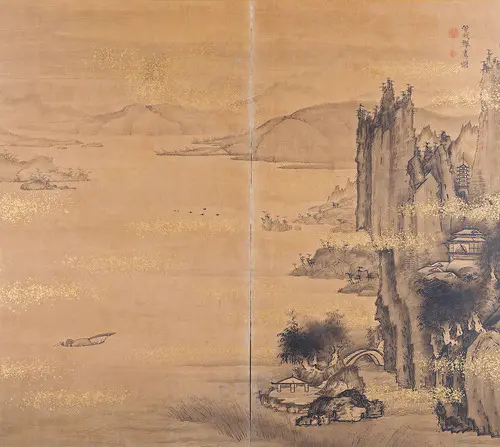
This traditional theme "The Eight Views of Xiangshan Lake" is depicted, making one think of the tranquil lake and the moon reflected in it. In a painting by Hokusai, the motif of clashing clouds is a prominent feature, and the distant mountain range, which becomes more radiant the further back it goes, creates an impressive sense of depth. A comical boat floats on the left shore of the lake, but upon closer inspection, the figures on the boat also possess a simplistic yet deliberate portrayal. The presence of the seals "Snakefoot" and "Tiger" suggests that this work is from Hokusai's later years.
伝統的画題「瀟湘八景図」の舞台である洞庭湖を思わせる湖と月が描かれる。蕭白の山水図では定番のモティーフである競り立つ雲谷派風の断崖に、奥へいくほど霞んで見える山並みが加わり、見事な遠近空間が創り上げられている。左の湖面に浮かんだ舟はコミカルに描かれるが、よく見ると舟上の人物も簡易ながらたしかな画意をもって描かれているのが分かる。付された「蛇足軒蕭白」「師龍」の印から蕭白の晩年に近い作と推察される。
View the original at Japan Search →Article 2 defines a museum as an institution that collects, keeps and displays materials on history, art, folklore, industry and natural science for public use, carries out research on them, and which has been registered under Chapter 2 of this Act. The registration is not decorative. In law, an unregistered collection open to the public is not a museum.
The cool part. The definition of keeping is given as including raising. That single parenthesis is why a zoo, an aquarium and a botanical garden sit inside museum law in Japan: the collection is allowed to be alive. Article 1 also grounds the statute in the Social Education Act and the Basic Act on Culture and the Arts, which places museums in education first and culture second.
Verify at e-Gov 法令検索 →Use it Two-colour foil on uncoated stock gets you most of this at production cost.
Description source: museum curator text, translated — not generated