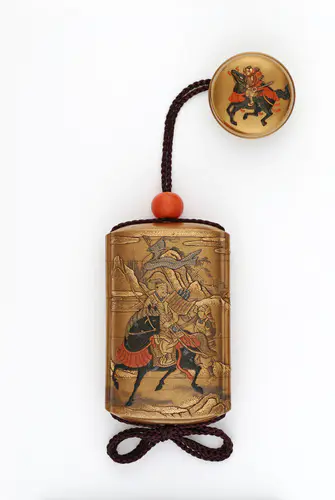
A four-panel shaped box with gold and silver inlay, depicting the source family of the Minamoto from the Katsura art style. The interior is made of gold lacquer. In the bottom center, there is a stamp. Many similar examples exist, and the stamp is known to date from the late Meiji period.
常形4段の印籠で、金粉溜地に高蒔絵で勿来関の源義家を高蒔絵で表す。段内部は金梨子地。底部中央下に作銘があるが、類例が多数現存し、明治中期以降の当時の新作。
View the original at Japan Search →A national statute written for one city. Article 1 recites the beauty of Kyoto and its historically, culturally and artistically important position in the world, and gives two purposes: to raise international culture and serve the ideal of permanent world peace, and to contribute to the economic recovery of Japan. It was passed five years after the war ended.
The cool part. Article 3 lets Kyoto designate culture tourism preservation districts and, by ordinance, prohibit building, rebuilding, removal, changes to the shape of the land and the cutting of bamboo, trees and stone, with compensation for ordinary loss. Then Article 4 does something statutes almost never do. It places a duty on the mayor personally: in the spirit of local autonomy, and with the cooperation of residents, the mayor must engage in ceaseless activity to complete the city. Nara received its own Act, number 250, the day before.
Verify at e-Gov 法令検索 →Use it A motif small enough to blind-deboss, which is where restraint actually shows.
Description source: museum curator text, translated — not generated