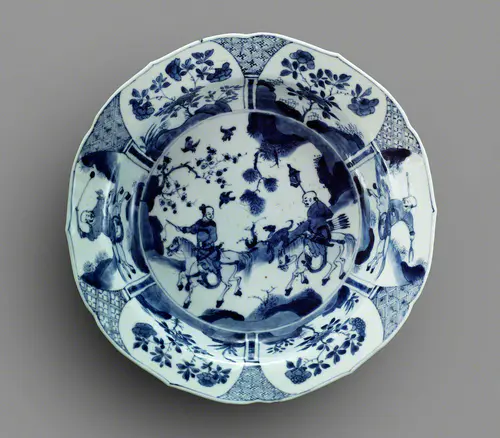
The edge of the teapot's spout is in the shape of a wheel. The body of the teapot is formed after the wheel is made, specifically by the process of molding, or stamping. On the inside bottom, there is a drawing of a horseman. From the standing part of the teapot to the spout, there are drawings of horsemen and flowers. On the outside, there are drawings of bamboo and flower motifs. The branches of the flower motifs have thorns, suggesting roses. If we consider it as a product for Europe, it was made after the lifting of the sea ban decree in 1683. On the bottom, there is a three-character two-line blue and white mark within the jurisdiction of Nagasaki.
鍔状の口縁部が輪花形の盤。轆轤成形の後に型打ち、すなわち印杯により成形されている。内面の底部に騎馬人物図が描かれ、立ち上がり部から口縁部は窓枠内に騎馬人物図と花卉文が配されている。外面には、唐草文と花卉文が描かれている。花卉文の枝には棘を持ち、薔薇と想定できる。ヨーロッパ向け製品とすると、1683年の海禁政策の解除以降の産品か。底裏には、ニ重圏線内に3字2行の青花銘。
View the original at Japan Search →Japan implementing the 1970 UNESCO Convention. When a foreign state reports that cultural property has been stolen from an institution, the Ministry of Foreign Affairs notifies the education ministry, which designates the object as specified foreign cultural property, after consulting the trade ministry. Importing a designated object then requires approval under the foreign exchange and trade law.
The cool part. Article 6 quietly rewrites private law. Under the Civil Code a good-faith purchaser is normally secure against a recovery claim after two years. For designated stolen foreign cultural property, the victim may demand recovery from two years after the theft until ten years have passed. Buying in good faith does not settle the question for a decade, which is roughly how long it takes a stolen object to surface on a legitimate market.
Verify at e-Gov 法令検索 →Use it Take the ratio, not the picture. It sets a page better than a grid does.
Description source: museum curator text, translated — not generated