Quiet reading✦No ads, ever

✦Corporate brand & media services✦Made in Virginia Beach since 1997✦

Huang Goodman · Art Forgotten

Art Forgotten

Art from public museum collections. A mismatched real Japanese law, and some other factoids.

Every object, image and description comes from the museum's own catalogue record, and every object links to its original. Japanese records are machine-translated into English; the museum's Japanese is kept beside the translation because it is the authoritative form. Each law carries its official number and links to e-Gov 法令検索, the Japanese government's statute database.

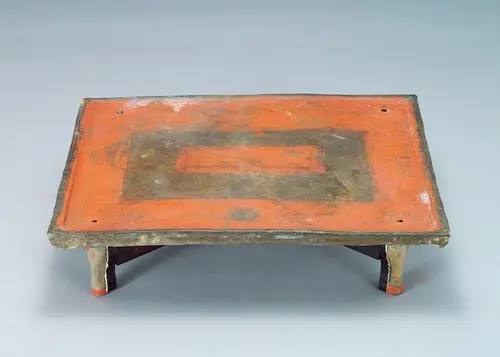
加彩案
{加彩案 · Maker unrecorded · 後漢(1-2世紀) / Later Han dynasty (1-2 C.) · Japan Search · 国立国会図書館}
Title: Kakai-an This catalog introduces the collection of Kakai-an. Kakai-an is a museum that holds a significant number of Japanese paintings and calligraphy works. The collection presents various artistic styles from different eras, showcasing the rich history of Japanese art. The museum is dedicated to preserving and exhibiting these cultural treasures for the public to appreciate. Visitors can expect to see a wide range of artistic expressions, from the intricate details of traditional painting techniques to the bold strokes of calligraphy. The exhibits are displayed in a way that allows for a deep exploration of each piece, providing context and background information. Kakai-an also offers educational programs and workshops for visitors of all ages, making art appreciation accessible to everyone. Through its collections and programs, Kakai-an aims to inspire and educate the next generation of art lovers and artists. The museum's commitment to preserving and promoting Japanese art makes it a must-visit destination for anyone interested in the history and culture of Japan.

Ear cups are associated with "sakuzuki," which means they are used for holding offerings. Originally made of lacquerware, but this one is made of clay and painted with red and black pictographs, representing the feeling of lacquerware. The ear cup and stand are one piece, which is odd. It is believed to have been excavated from a Han dynasty tomb in the Huanghe region. It was made with the hope of feasting the deceased in the underworld, and was used as a secondary burial item. Moreover, the popularity of southern Chinese lacquerware in the Huanghe region is intriguing about this piece.

耳杯は「さかずき」のことで、案はお盆をさす。本来は漆器で作られるが、これは墓の副葬品として土で作られており、赤と黒の絵具で彩色することで漆器の質感を表している。杯と案は一具であり、そろっているのは珍しい。おそらく華北の前漢墓から出土したと考えられる。冥界での死者の宴を願い、副葬したのである。さらには華北では華南産の漆器が人気があったことが窺えて興味深い作品である。

View the original at Japan Search →
The law
文化財の不法な輸出入等の規制等に関する法律
Act on Controls on the Illicit Export and Import of Cultural Property
平成十四年法律第八十一号 · Act No. 81 of 2002

Japan implementing the 1970 UNESCO Convention. When a foreign state reports that cultural property has been stolen from an institution, the Ministry of Foreign Affairs notifies the education ministry, which designates the object as specified foreign cultural property, after consulting the trade ministry. Importing a designated object then requires approval under the foreign exchange and trade law.

The cool part. Article 6 quietly rewrites private law. Under the Civil Code a good-faith purchaser is normally secure against a recovery claim after two years. For designated stolen foreign cultural property, the victim may demand recovery from two years after the theft until ten years have passed. Buying in good faith does not settle the question for a decade, which is roughly how long it takes a stolen object to surface on a legitimate market.

Verify at e-Gov 法令検索 →

Use it Two-colour foil on uncoated stock gets you most of this at production cost.

Description source: museum curator text, translated — not generated