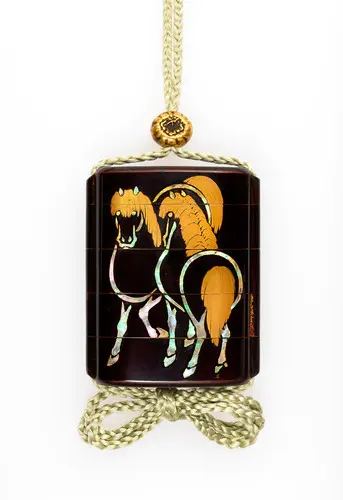
In the past, a four-panel lacquer box is depicted. The exterior is painted black with a spiral design and a flat painting of a horse with bone drawing. The interior is covered with gold lacquer. There is an inscription on the cover and handle. It is the old collection of the art historian Louis Gonzalez, who is well-known as a central figure in spreading Japanese art in France. Few examples are known.
昔形4段の印籠で、黒蝋色塗地に螺鈿と平蒔絵で骨描きの野馬を表す。段内部は金梨子地。表紐通部に作銘。フランスでジャポニスムを広めた中心人物として知られる美術史家ルイ・ゴンスの旧蔵。類例が数点知られる。
View the original at Japan Search →Unusually for a Japanese statute it opens with a preamble, which states that finding joy in creating culture and living among it is an unchanging wish of people, and that culture contributes to world peace. Article 2 then sets the principles: the autonomy of those who make culture must be fully respected, and their creativity, standing and capacity considered.
The cool part. Article 2, paragraph 3 is the line worth reading twice. It says that creating and receiving culture is a right people are born with, and requires an environment in which citizens can appreciate, participate and create regardless of age, disability, economic situation, or the area they live in. Four barriers named in statute, one of which is your postcode. It puts the arts in the same grammatical register as infrastructure. Not a subsidy argued for each year, a standing obligation.
Verify at e-Gov 法令検索 →Use it Two-colour foil on uncoated stock gets you most of this at production cost.
Description source: museum curator text, translated — not generated