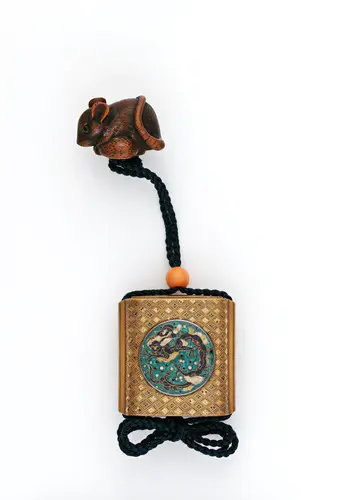
In the past, this cylindrical container has three tiers on its body. The body is painted with a design of chrysanthemums blossoming in a dripping ink style on each tier. The container itself is coated black on the inside. The exterior is inlaid with gold and silver specks and features a flat painting of lotus petals intertwined. On the front, there is a circular design of a seven-treasure dragon. The back is inlaid with a scattered design of lotus and hemp leaves and features a design of the seven treasures represented by wave and moon motifs.
昔形の鞘印籠で、身は3段。身は菊尽の研出蒔絵で段内部は黒蝋色塗。鞘は金粉溜地に、表は菱繋文の平蒔絵に丸龍文の七宝板を象嵌し、裏は菱唐草文散に波月文の七宝板を象嵌する。
View the original at Japan Search →A national statute written for one city. Article 1 recites the beauty of Kyoto and its historically, culturally and artistically important position in the world, and gives two purposes: to raise international culture and serve the ideal of permanent world peace, and to contribute to the economic recovery of Japan. It was passed five years after the war ended.
The cool part. Article 3 lets Kyoto designate culture tourism preservation districts and, by ordinance, prohibit building, rebuilding, removal, changes to the shape of the land and the cutting of bamboo, trees and stone, with compensation for ordinary loss. Then Article 4 does something statutes almost never do. It places a duty on the mayor personally: in the spirit of local autonomy, and with the cooperation of residents, the mayor must engage in ceaseless activity to complete the city. Nara received its own Act, number 250, the day before.
Verify at e-Gov 法令検索 →Use it Take the ratio, not the picture. It sets a page better than a grid does.
Description source: museum curator text, translated — not generated