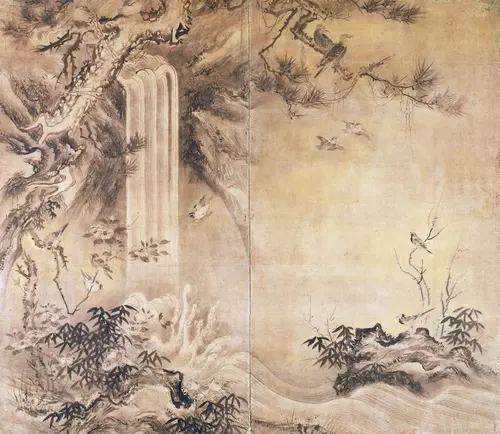
In the depths of a mountainous waterfall, a scene of small birds with a few feathers dancing playfully is delicately depicted in ink. Gold lacquer is skillfully used in the blank areas to add elegance. The waterfall, which serves as the center, is concentrated on the left side of the screen, while the right side opens up vastly. The lightness of the birds flitting about contrasts with the dynamic falling water of the waterfall, which exudes a grandeur that complements the grandeur of the Peony Painting, and evokes a sense of refreshing purity.
山深い滝の周囲を小鳥が数羽舞い遊ぶ様子が、墨の濃淡のみで巧みに描かれ、余白の部分に金泥がうすく用いられて華やかさを添えている。滝を中心として崖の上の松、滝壺やその近くの竹、土坡などを画面左手に集中させ、画面右手は大きく空間をとる。飛び交う小鳥の軽やかさとは対照的に、水しぶきを上げてダイナミックに落下する滝の姿は壮観で、桃山絵画の豪壮さとともに清涼感を感じさせる気品にあふれている。
View the original at Japan Search →Japan implementing the 1970 UNESCO Convention. When a foreign state reports that cultural property has been stolen from an institution, the Ministry of Foreign Affairs notifies the education ministry, which designates the object as specified foreign cultural property, after consulting the trade ministry. Importing a designated object then requires approval under the foreign exchange and trade law.
The cool part. Article 6 quietly rewrites private law. Under the Civil Code a good-faith purchaser is normally secure against a recovery claim after two years. For designated stolen foreign cultural property, the victim may demand recovery from two years after the theft until ten years have passed. Buying in good faith does not settle the question for a decade, which is roughly how long it takes a stolen object to surface on a legitimate market.
Verify at e-Gov 法令検索 →Use it Palette for a single-colour run: one ink, heavy stock, nothing else on the sheet.
Description source: museum curator text, translated — not generated