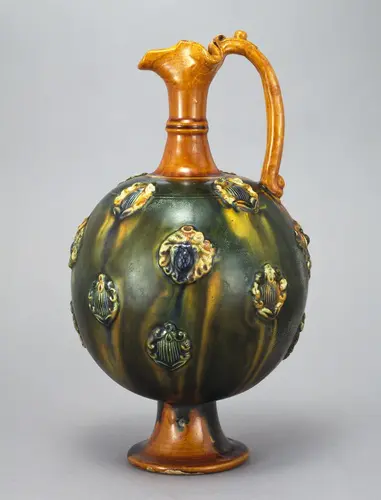
The body is large and protrudes in a spherical shape, in contrast, the neck and elevated platform create an unstable posture like a water jar. The mouth is a narrow slit on both sides, and the hands extending from the shoulders are attached. The body has a decorative motif in the shape of a parquetry design, consisting of three tiers and decorated with birds. The base is covered with a green glaze, but it has a somewhat uneven glaze tone.
胴は大きく張り出した球形で、それに対して頸と高台がきゃしゃに作られ、やや不安定な姿の水注である。口は両方からすぼませた弁口で、肩から伸びた把手が取り付いている。胴にはパルメット形の貼花文が3段、千鳥に飾られ、藍釉が掛けられている。地は緑釉が総掛けされているが、やや斑な釉調となる。
View the original at Japan Search →Article 1 states the purpose plainly: prevent trade in stolen goods, find them quickly, and speed the recovery of victims. Article 2 then defines a used article to include, in the same breath, art objects held for appreciation. Dealing in them requires a licence.
The cool part. Article 16 requires a dealer to record every transaction: the date, the item and quantity, its distinguishing features, and the address, name, occupation and age of the other party. Article 15 requires that a dealer who suspects an item is stolen report it to a police officer immediately. So the antique trade runs on a register the police may read, and a painting becomes a second-hand article the moment it has been used once.
Verify at e-Gov 法令検索 →Use it Palette for a single-colour run: one ink, heavy stock, nothing else on the sheet.
Description source: museum curator text, translated — not generated