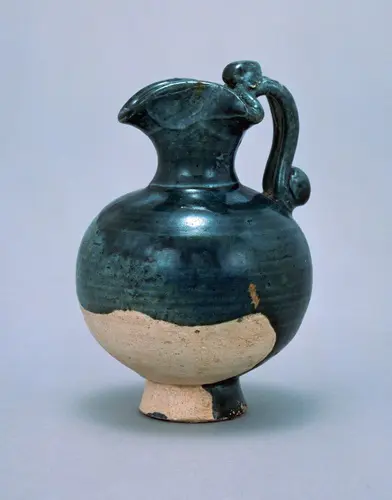
A small ceramic water jar. White clay shows through, the bottom is unglazed. The glaze is thought to be inspired by lapis lazuli, but the origin of the clay body, Chinese or Western, is still a subject of consideration. The small size of the body is likely for mass production, and it is also possible that this shape of water jar was particularly favored.
小ぶりな水注。白い素地に藍釉が掛り、裾は素地見せとなる。藍釉はラピスラズリの色をヒントに作り出されたと考えられるが、その顔料は中国産か、西方産かは検討の余地がある。器体が小ぶりであるのは、量産のためであり、さらには、この形の水注がとくに好まれたためであろう。
View the original at Japan Search →Article 2 defines a museum as an institution that collects, keeps and displays materials on history, art, folklore, industry and natural science for public use, carries out research on them, and which has been registered under Chapter 2 of this Act. The registration is not decorative. In law, an unregistered collection open to the public is not a museum.
The cool part. The definition of keeping is given as including raising. That single parenthesis is why a zoo, an aquarium and a botanical garden sit inside museum law in Japan: the collection is allowed to be alive. Article 1 also grounds the statute in the Social Education Act and the Basic Act on Culture and the Arts, which places museums in education first and culture second.
Verify at e-Gov 法令検索 →Use it The border is the idea. Use it as an edge treatment and leave the centre empty.
Description source: museum curator text, translated — not generated