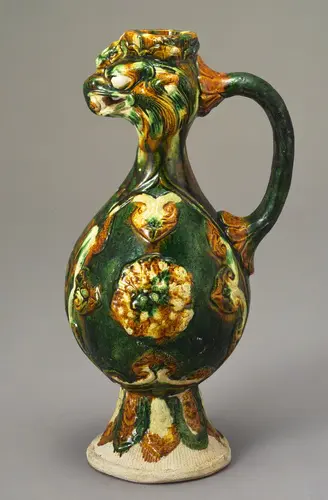
The lip of this vessel resembles a phoenix beak in the water well, making it an ancient prototype from the Sasan period. The body is adorned with continuous and floral patterns, both typical of Sasan period atmospheres. The handles are shaped like bamboo, while lotus petal decorations are attached to the high stands. This type of water vessel is made by combining two molds, and it is also made using this method, resulting in a refined overall appearance. The base is covered in green glaze, while brown and white glazes are added as decorations, making the forms more exquisite.
注口が鳳首形になった水注で、ササン朝の銀器がその祖形である。さらに胴に飾られた連珠文、花文もササン朝の雰囲気を備えている。把手は蔓草風で、高台には蓮弁文を貼り付けている。このタイプの水注は2つの型を合わせて作っており、これもその方法で作られているが、全体に丁寧な作りである。緑釉をベースに褐釉、白釉が点彩され、造形をよりエキゾチックにしている。
View the original at Japan Search →Article 1 states the aim as a beautiful and dignified national land, and it covers not only cities but farming, mountain and fishing villages. Inside a landscape planning area, Article 16 requires advance notification of new building, extension, rebuilding, relocation, and any repair or alteration that changes the exterior. Landscape Districts go further and impose direct restrictions on the form and design of buildings.
The cool part. Read Article 16 to the end of the sentence. A change of colour is listed alongside new construction as an act you must notify. Repainting your building is, in law, the same category of event as putting up a new one. This is the machinery behind the muted shopfronts of Kyoto. The brown coffee-shop sign is not a marketing choice, it is compliance.
Verify at e-Gov 法令検索 →Use it Two-colour foil on uncoated stock gets you most of this at production cost.
Description source: museum curator text, translated — not generated