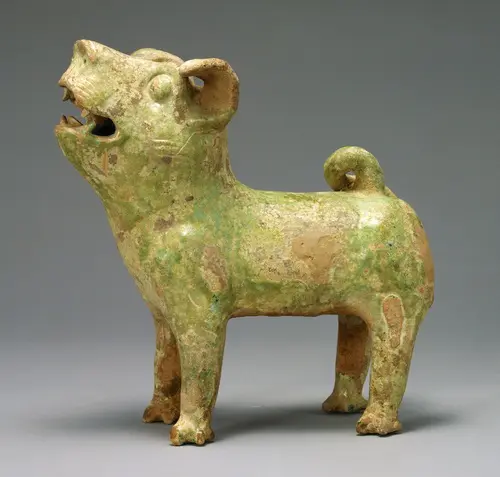
In the Han Dynasty, dogs were kept as pets. When someone dear to them was still alive, they enjoyed playing with them. This dog also seems sad about its master's death, howling at a distance. There are many dog relics, and their shapes vary. The green glaze makes it beautifully silvered.
漢時代、犬は家犬として飼われていた。死者が生前、身近において愛玩したのである。この犬も飼主の死を悲しみ、遠吠えしているようである。犬の遺例は多く、姿も様々である。緑釉は美しく銀化している。
View the original at Japan Search →Japan implementing the 1970 UNESCO Convention. When a foreign state reports that cultural property has been stolen from an institution, the Ministry of Foreign Affairs notifies the education ministry, which designates the object as specified foreign cultural property, after consulting the trade ministry. Importing a designated object then requires approval under the foreign exchange and trade law.
The cool part. Article 6 quietly rewrites private law. Under the Civil Code a good-faith purchaser is normally secure against a recovery claim after two years. For designated stolen foreign cultural property, the victim may demand recovery from two years after the theft until ten years have passed. Buying in good faith does not settle the question for a decade, which is roughly how long it takes a stolen object to surface on a legitimate market.
Verify at e-Gov 法令検索 →Use it Take the ratio, not the picture. It sets a page better than a grid does.
Description source: museum curator text, translated — not generated