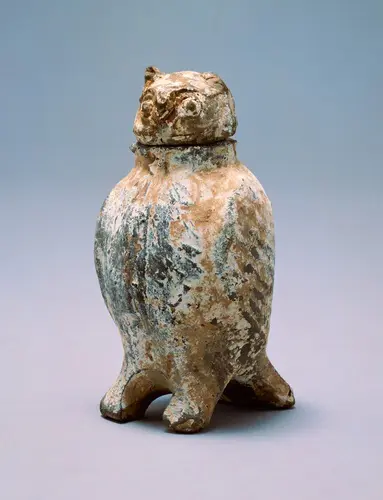
A stork is a bird with the shape of a vulture. Many earthenware pots of this form were made during the Shang Dynasty. The night sky was dominated by the vulture, which was feared by ancient Chinese people and incorporated into their ceremonial vessels. The potter formed the shape and coated it with lacquer. It used to be covered in color, but the paint has faded. It is believed to have contained wine for the dead.
鴟鴞とは梟の姿をした怪鳥。商時代の青銅器にこの形の器が盛んに作られている。夜の世界を支配する梟は、古代中国人に畏怖され、祭器の形にも取り入れられたのである。型で器を作り、胡粉を塗っている。かつては彩色されていたが、絵具は剥落している。冥界に送る死者にたむける酒が入れられていたのだろう。
View the original at Japan Search →A national statute written for one city. Article 1 recites the beauty of Kyoto and its historically, culturally and artistically important position in the world, and gives two purposes: to raise international culture and serve the ideal of permanent world peace, and to contribute to the economic recovery of Japan. It was passed five years after the war ended.
The cool part. Article 3 lets Kyoto designate culture tourism preservation districts and, by ordinance, prohibit building, rebuilding, removal, changes to the shape of the land and the cutting of bamboo, trees and stone, with compensation for ordinary loss. Then Article 4 does something statutes almost never do. It places a duty on the mayor personally: in the spirit of local autonomy, and with the cooperation of residents, the mayor must engage in ceaseless activity to complete the city. Nara received its own Act, number 250, the day before.
Verify at e-Gov 法令検索 →Use it Two-colour foil on uncoated stock gets you most of this at production cost.
Description source: museum curator text, translated — not generated