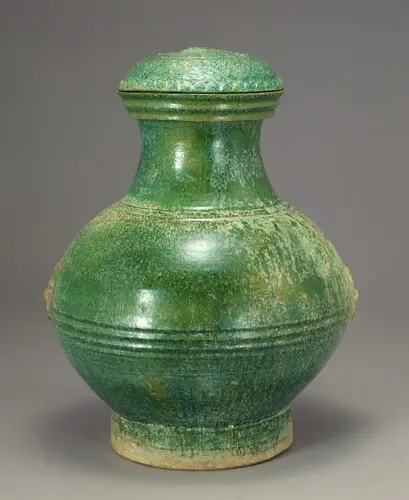
This pot is a piece from the Later Han Dynasty. The lid is unusual. It is a pottery piece depicting a bronze pot. The outline of the body and shoulders of the bronze pot can be seen through it. The bronze pot is made of copper, tin, and zinc alloy, and it was gold-colored when it was made. This green glaze is not meant to represent copper patina. The metallic atmosphere of the metal is expressed through the green glaze. Such bronze-glazed pottery was produced in the central region of Huabei during the middle of the Later Han Dynasty, but production ceased after that.
この壺は後漢時代の作品。蓋が伴っているのは珍しい。青銅器の壺を写した器形で、胴や肩の圏線にその名残が窺える。青銅器の壺は銅と錫と鉛の合金であり、作られた時は金色に輝いていた。この緑釉は銅錆を表現したものではない。金属の持つメタリックな雰囲気を緑釉で表したのである。こうした鉛釉陶器は後漢時代中期の2世紀頃まで華北を中心に作られているがその後は作られなくなる。
View the original at Japan Search →Unusually for a Japanese statute it opens with a preamble, which states that finding joy in creating culture and living among it is an unchanging wish of people, and that culture contributes to world peace. Article 2 then sets the principles: the autonomy of those who make culture must be fully respected, and their creativity, standing and capacity considered.
The cool part. Article 2, paragraph 3 is the line worth reading twice. It says that creating and receiving culture is a right people are born with, and requires an environment in which citizens can appreciate, participate and create regardless of age, disability, economic situation, or the area they live in. Four barriers named in statute, one of which is your postcode. It puts the arts in the same grammatical register as infrastructure. Not a subsidy argued for each year, a standing obligation.
Verify at e-Gov 法令検索 →Use it A motif small enough to blind-deboss, which is where restraint actually shows.
Description source: museum curator text, translated — not generated