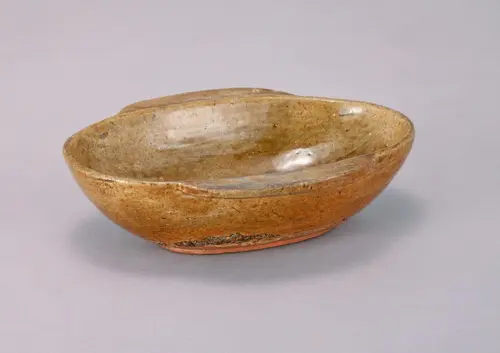
Adding a patina of oxidized tin changes the color to a brown hue. The shape is identical to that of a green-glazed earthenware ear cup, but the handle and form of this piece are more reminiscent of a lacquer ware ear cup.
酸化鉛に、酸化鉄を加えると褐色に発色する。器形は緑釉印花文耳杯と同じであり、漆器の耳杯を写したものである。しかし把手、器の形はこちらの作品がより漆器にちかい。
View the original at Japan Search →Article 1 gives three grounds for regulating a sign: forming good landscape, maintaining scenic character, and preventing danger to the public. Article 3 then lets a prefecture prohibit outdoor advertising outright, by ordinance, in named categories of place.
The cool part. Read the list in Article 3 and it stops being an advertising law. The places where signage can be banned include landscape districts, scenic districts, preservation districts for groups of traditional buildings, the surroundings of designated Important Cultural Properties, and historic sites, places of scenic beauty and natural monuments. The statute protects the view by removing the sentences written across it.
Verify at e-Gov 法令検索 →Use it The border is the idea. Use it as an edge treatment and leave the centre empty.
Description source: museum curator text, translated — not generated