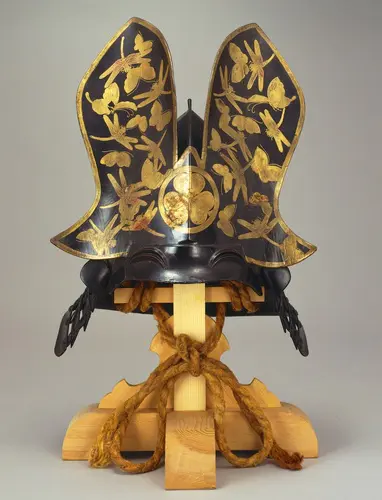
In the late Muromachi period, the craftsmen of armor had more freedom to express themselves, leading to the creation of helmets in various favored shapes. During the Edo period, helmets were made by lacquering multiple layers of washi paper. This piece features a crest of the Tokugawa family, the three-leafed chrysanthemum, in the center, and is decorated all over with insects, specifically beetles and butterflies, in a flat painting style. It is speculated that this helmet belonged to the Tokugawa family due to the presence of their crest.
室町時代末期以降、甲冑の意匠が自由に表現されるようになるにつれて、兜も好みの形が作られた。江戸時代には、和紙を張り重ねた張子作りの型に漆を塗った張懸兜は精巧を極めた。本作は中央に徳川家の紋である三葉葵を、そして全面に蜻蛉と蝶を平蒔絵で描いた兜で、徳川家にゆかりのあるものと推測される。
View the original at Japan Search →It protects not the buildings but the setting that holds them. Article 2 defines historic landscape as land where structures and remains of historical significance form a single whole with the surrounding natural environment, which is the legal way of saying the hills, the approaches and the sightlines. The ancient capitals are Kyoto, Nara and Kamakura, plus any other municipality added by Cabinet Order. The Minister of Land, Infrastructure, Transport and Tourism designates a preservation area; city planning then carves a Special Preservation District over its core, and inside that district an owner needs permission from the prefectural governor to build, to fell timber, or to change the shape of the ground.
The cool part. It legislates the view, and then it pays for it. Article 10 requires the prefecture to compensate an owner who suffers loss because permission was refused. Article 12 goes further: where refusal seriously impairs the use of the land, the owner can require the prefecture to buy it, at market value. So the state does not merely tell you what the horizon behind a temple may look like. It agrees to purchase the land rather than let the skyline change. Two more things worth knowing. The prefecture must physically sign the district boundary, and a landowner may not obstruct the sign without just cause. And the ministry holding the pen is Transport, not Culture.
Verify at e-Gov 法令検索 →Use it Palette for a single-colour run: one ink, heavy stock, nothing else on the sheet.
Description source: museum curator text, translated — not generated