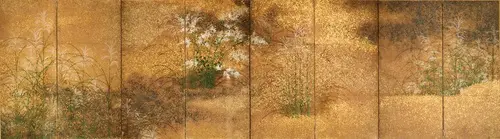
In the world of flower pictures, the Autumn Grass Picture stands out as one of the most frequently depicted. It is composed of a long horizontal screen painting with a relatively small size. The grasses and reeds are divided into four groups, and are balanced and placed harmoniously, scattering silver sand on the canvas. The silver sand effectively conveys the effects of moonlight, sunset, and earthen mounds. In this type of picture, the moon is usually depicted together. However, in this particular piece, it cannot be found. Furthermore, the silver sand has turned black due to oxidation over the years.
草花図の中でも秋草図は一つの定番として多く描かれてきた。比較的小さな寸法で仕立てられた屏風の横長の画面に、芒と萩を4つの草叢に分け、バランスよく配置しており、画面に散らされた金銀の砂子は、月光や霞、土坡などを効果的に表すと同時に、奥行きの演出にも一役買っている。こうした図案では月も一緒に描かれるのが主流であるが、ここでは見つけることはできない。また銀の砂子は経年による酸化が激しく、現在では黒く変色している。
View the original at Japan Search →It protects not the buildings but the setting that holds them. Article 2 defines historic landscape as land where structures and remains of historical significance form a single whole with the surrounding natural environment, which is the legal way of saying the hills, the approaches and the sightlines. The ancient capitals are Kyoto, Nara and Kamakura, plus any other municipality added by Cabinet Order. The Minister of Land, Infrastructure, Transport and Tourism designates a preservation area; city planning then carves a Special Preservation District over its core, and inside that district an owner needs permission from the prefectural governor to build, to fell timber, or to change the shape of the ground.
The cool part. It legislates the view, and then it pays for it. Article 10 requires the prefecture to compensate an owner who suffers loss because permission was refused. Article 12 goes further: where refusal seriously impairs the use of the land, the owner can require the prefecture to buy it, at market value. So the state does not merely tell you what the horizon behind a temple may look like. It agrees to purchase the land rather than let the skyline change. Two more things worth knowing. The prefecture must physically sign the district boundary, and a landowner may not obstruct the sign without just cause. And the ministry holding the pen is Transport, not Culture.
Verify at e-Gov 法令検索 →Use it Palette for a single-colour run: one ink, heavy stock, nothing else on the sheet.
Description source: museum curator text, translated — not generated