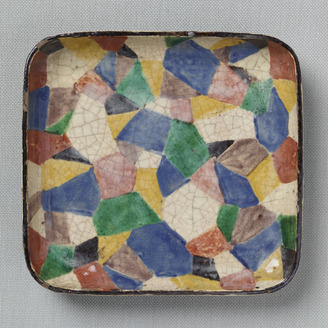
This object is a bowl with intricately carved ice crack designs, created during the Chinese Clear Dynasty. It is a work of the potter Tofukuji Yasui (1633-1743). One piece in a set of five bears the inscription "Japanese Origin / Year of Production Tofukuji Yasui / Hiding (seal)" and is believed to have been made just before Tofukuji Yasui opened his kiln at the waterfall. Tofukuji Yasui studied under the master Kinkokuni Tone, and temporarily lived and hid in the southern part of Kyoto city, near the temple Myoshin-ji.
中国・清時代によく用いられた氷裂文の意匠を取り入れ、多彩な彩色を施した角皿である。尾形乾山(一六六三~一七四三)の作である。五枚組みの一枚に高台内に、「日本元禄/年製乾山/陶隠(印)」と記されており、乾山が鳴滝に開窯して間もない頃に作られたものとされている。乾山は、隠元隆琦の高弟である独照性円に師事して、京都市右京区・御室仁和寺の南で一時隠棲生活を送ってるなどしている。
View the original at Japan Search →Japan implementing the 1970 UNESCO Convention. When a foreign state reports that cultural property has been stolen from an institution, the Ministry of Foreign Affairs notifies the education ministry, which designates the object as specified foreign cultural property, after consulting the trade ministry. Importing a designated object then requires approval under the foreign exchange and trade law.
The cool part. Article 6 quietly rewrites private law. Under the Civil Code a good-faith purchaser is normally secure against a recovery claim after two years. For designated stolen foreign cultural property, the victim may demand recovery from two years after the theft until ten years have passed. Buying in good faith does not settle the question for a decade, which is roughly how long it takes a stolen object to surface on a legitimate market.
Verify at e-Gov 法令検索 →Use it Palette for a single-colour run: one ink, heavy stock, nothing else on the sheet.
Description source: museum curator text, translated — not generated