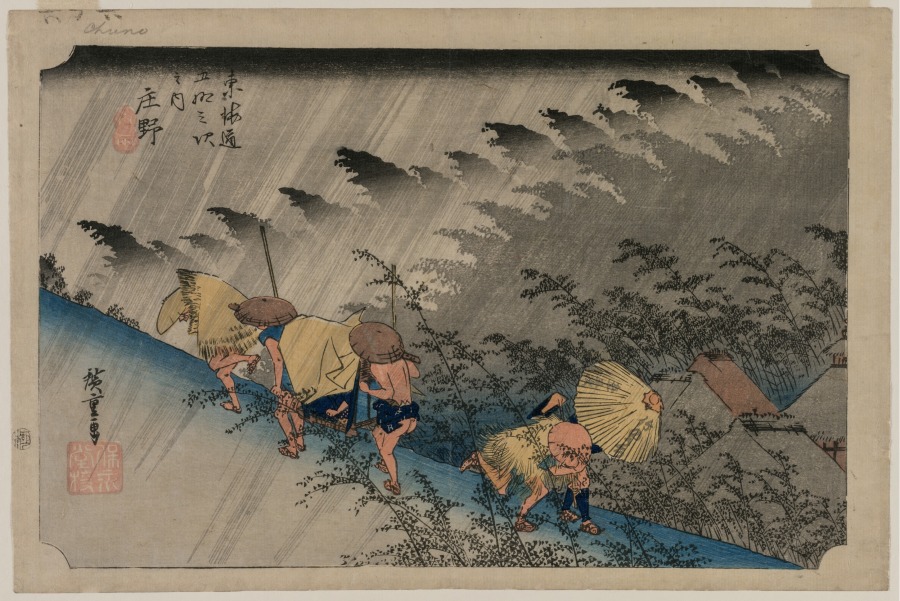
Utagawa Hiroshige’s design for this print captures the atmospheric qualities of rain and its effects on two groups of travelers. Three printing blocks were required to produce the three shades of gray used to suggest distance in the thickets of bamboo in the background. The publisher’s name, “Takenouchi,” and part of the series title, Fifty-Three Stations, are written on one person’s umbrella. Hiroshige created many different print series on the Tokaidō, a road that ran from Kyoto to Edo (now Tokyo). Shōno was a minor way station along this largely coastal route.
View the original at Cleveland Museum of Art →Article 1 states the purpose plainly: prevent trade in stolen goods, find them quickly, and speed the recovery of victims. Article 2 then defines a used article to include, in the same breath, art objects held for appreciation. Dealing in them requires a licence.
The cool part. Article 16 requires a dealer to record every transaction: the date, the item and quantity, its distinguishing features, and the address, name, occupation and age of the other party. Article 15 requires that a dealer who suspects an item is stolen report it to a police officer immediately. So the antique trade runs on a register the police may read, and a painting becomes a second-hand article the moment it has been used once.
Verify at e-Gov 法令検索 →Use it Take the ratio, not the picture. It sets a page better than a grid does.
Description source: museum curator text — not generated