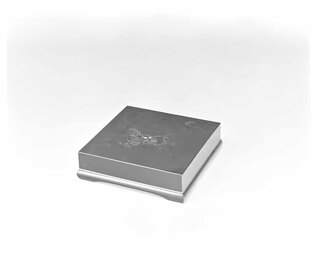
This dragon was thought of as one who brings rain in Chinese mythology, making it a noble sacred beast representing the emperor. It is believed this image was also conveyed in Japan. However, this dragon has a gentle and affectionate expression. The artist, Tatehira Longbei, was skilled in the Rimpa painting style and was active in Kyoto from the early Edo period. The inscription on the bottom of the piece reads "Tatehira / High Rank (Flower Stamp).
雨を降らすと考えられていた龍は、天候を司るということで、中国では皇帝を象徴する高貴な霊獣だ。日本にもそのイメージが伝わったはずだが、この龍はどことなく愛嬌がある。作者の田付長兵衛は、研出蒔絵を得意とし、江戸時代の前半から代々京都で活躍した蒔絵師の一族だ。本品の底には「田付氏/高廣(花押)」の銘がある。
View the original at Japan Search →A statute built to coax privately held work onto public walls. An owner registers a piece with the Commissioner for Cultural Affairs, then contracts with a museum to display it. Article 2 defines a work of art broadly, as paintings, sculpture, crafts and other tangible cultural products that are movable, which is the legal way of saying anything you could carry out of the house.
The cool part. The terms are the interesting part. Article 2 requires the public display contract to run for five years or more, and to contain a clause stating that the parties may not give notice of cancellation. You cannot lend a masterpiece for the tax treatment and then reclaim it when the market turns. Japan concluded the barrier to seeing art was never storage. It was ownership, and the fix was a contract you cannot walk out of.
Verify at e-Gov 法令検索 →Use it Palette for a single-colour run: one ink, heavy stock, nothing else on the sheet.
Description source: museum curator text, translated — not generated