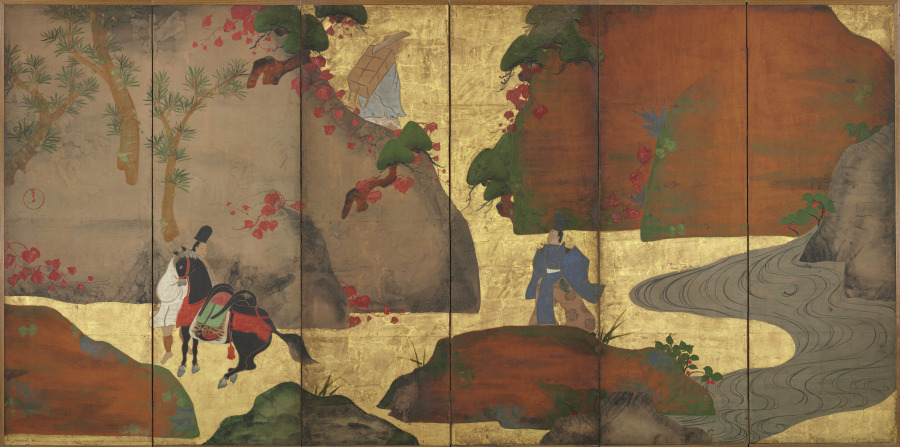
In an episode from the tenth-century literary classic The Tales of Ise, a courtier happens upon a Buddhist priest on an ivy-covered pass on Mount Utsu, a Japanese homonym for “Melancholy Mountain.” He entrusts the priest with a letter to a former lover in the capital whom he laments he can no longer see, even in dreams. The Tales of Ise features poems set within a basic narrative of the journeys of a courtier in exile.
View the original at Cleveland Museum of Art →Article 1 states the purpose plainly: prevent trade in stolen goods, find them quickly, and speed the recovery of victims. Article 2 then defines a used article to include, in the same breath, art objects held for appreciation. Dealing in them requires a licence.
The cool part. Article 16 requires a dealer to record every transaction: the date, the item and quantity, its distinguishing features, and the address, name, occupation and age of the other party. Article 15 requires that a dealer who suspects an item is stolen report it to a police officer immediately. So the antique trade runs on a register the police may read, and a painting becomes a second-hand article the moment it has been used once.
Verify at e-Gov 法令検索 →Use it Palette for a single-colour run: one ink, heavy stock, nothing else on the sheet.
Description source: museum curator text — not generated