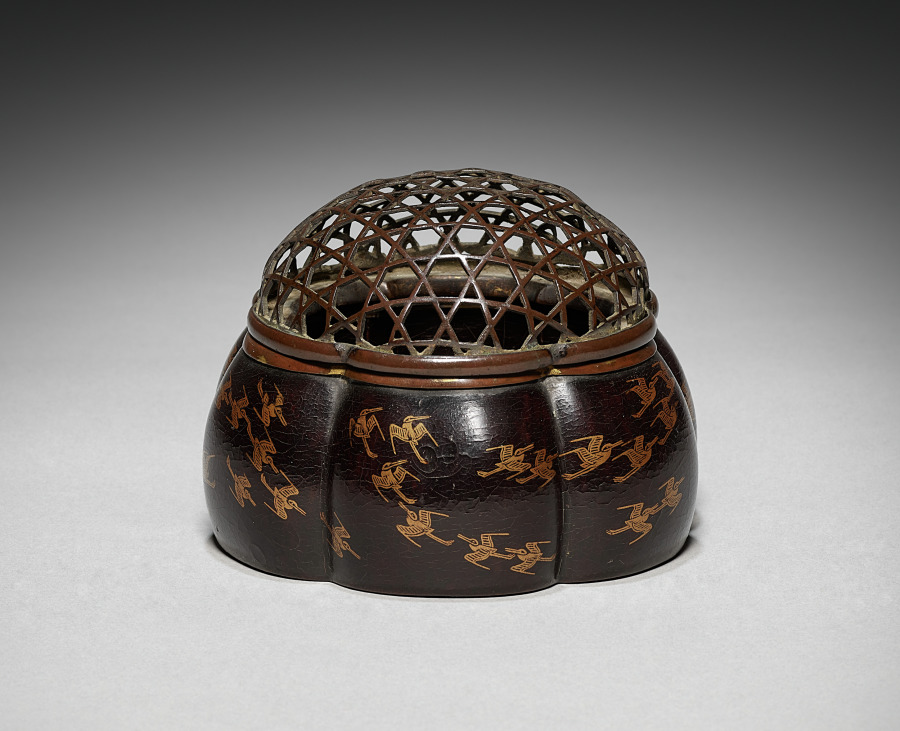
This container's repeated, undulating, rounded sides evoke waves over which the articulated plovers sweep. The bronze cover (probably a later addition) mimics the design of a fishing weir. Overall, the container brings to mind the seashore. The earthy quality of the lacquered surface demonstrates the interaction between a man-made pattern (the plovers) and the somewhat unexpected surface of a natural material such as wood.
View the original at Cleveland Museum of Art →Article 1 gives three grounds for regulating a sign: forming good landscape, maintaining scenic character, and preventing danger to the public. Article 3 then lets a prefecture prohibit outdoor advertising outright, by ordinance, in named categories of place.
The cool part. Read the list in Article 3 and it stops being an advertising law. The places where signage can be banned include landscape districts, scenic districts, preservation districts for groups of traditional buildings, the surroundings of designated Important Cultural Properties, and historic sites, places of scenic beauty and natural monuments. The statute protects the view by removing the sentences written across it.
Verify at e-Gov 法令検索 →Use it A motif small enough to blind-deboss, which is where restraint actually shows.
Description source: museum curator text — not generated