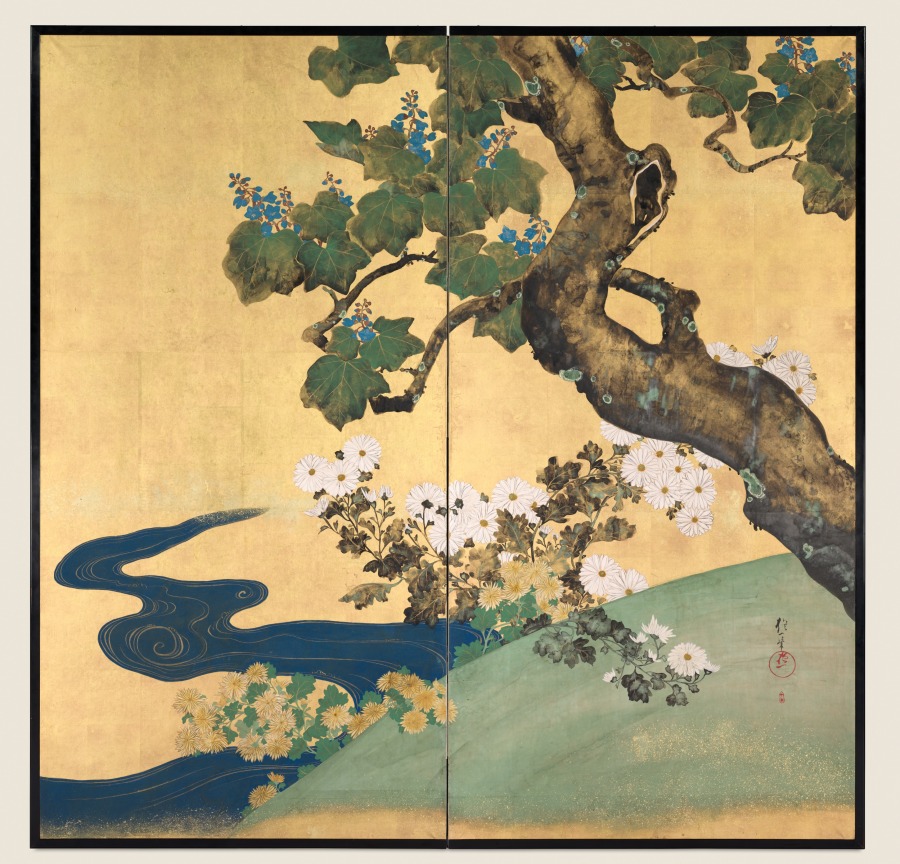
In this screen, Sakai Hōitsu expertly deployed a painting technique called “dripping-in” (tarashikomi). Ink and color dripped on the surface, and allowed to pool there, created the illusionistic effect of lichen-dotted tree bark and twisted chrysanthemum leaves. Paulownia and chrysanthemum are signifiers of late spring and early autumn as well as emblems of the Japanese imperial house. Paulownia also has medicinal properties and associations with fortitude, while chrysanthemum symbolizes good government.
View the original at Cleveland Museum of Art →Article 3 tells libraries what to gather, and the list is wider than books: local materials, local administrative records, works of art, records and film. Article 3 also requires interlibrary lending, travelling collections and mobile libraries, so that the holdings move toward the reader rather than waiting.
The cool part. Article 17 is one sentence and admits nothing. A public library may not collect an admission fee, or any consideration whatsoever, for the use of library materials. Free is not a policy that a budget round can revisit, it is the statute. Article 26 is stranger still: the state and local authorities must not interfere in the work of a private library, and must not give it a subsidy. Independence is protected by withholding the money.
Verify at e-Gov 法令検索 →Use it Palette for a single-colour run: one ink, heavy stock, nothing else on the sheet.
Description source: museum curator text — not generated