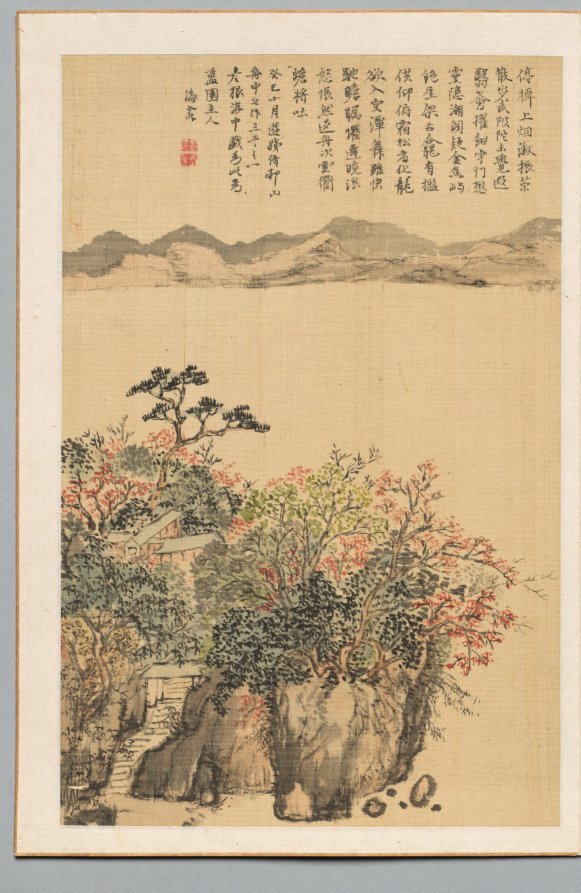
The Buddhist temple Ikiyasan Isakiji lies about 12.4 miles (20 km) from Hikone Castle, on the shore of Lake Biwa in central Japan. Nukina Kaioku depicted the temple as seen from a boat while touring Hikone. He also inscribed a poem about the experience, explaining that it was one of three written during the journey. Born into a samurai family specializing in archery, Kaioku later became recognized as one of the three greatest calligraphers of his time.
View the original at Cleveland Museum of Art →A craft cannot call itself traditional by taste or reputation. Article 2 sets five conditions, all of which must hold: it is used mainly in daily life, the main part of its making is by hand, it is made by traditional techniques, it is made chiefly from materials traditionally used, and a not-small number of people in a defined area still make it. The designation names the techniques, the materials and the region.
The cool part. Two conditions do quiet work. The first is daily use, so a technique kept alive only for display does not qualify. The fifth is the number of makers: the law will not protect a single surviving genius, because one person is a biography and not an industry. And because the region is written into the designation, the craft is legally attached to a place and cannot move.
Verify at e-Gov 法令検索 →Use it A motif small enough to blind-deboss, which is where restraint actually shows.
Description source: museum curator text — not generated