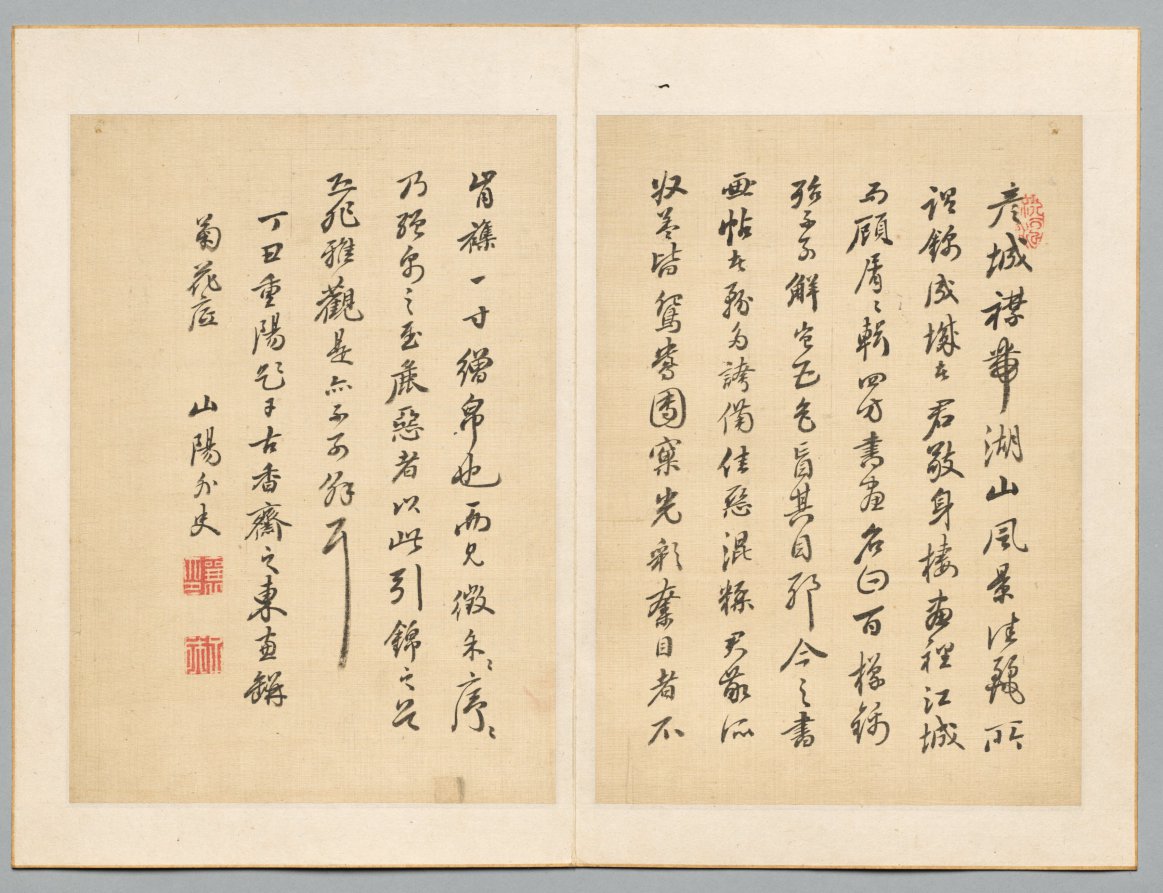
Historian Rai San’yō, whose family came from Hiroshima and achieved elite samurai status from modest beginnings as textile dyers, contributed three calligraphies to these albums, including this preface, in which he explains that the albums were being assembled to show off the beauty of the landscape along Lake Biwa near Hikone Castle in central Japan. The albums also feature one leaf each by San’yō’s father, a scholar, and his two uncles, a physician and a scholar turned local government official.
View the original at Cleveland Museum of Art →Article 1 states the purpose plainly: prevent trade in stolen goods, find them quickly, and speed the recovery of victims. Article 2 then defines a used article to include, in the same breath, art objects held for appreciation. Dealing in them requires a licence.
The cool part. Article 16 requires a dealer to record every transaction: the date, the item and quantity, its distinguishing features, and the address, name, occupation and age of the other party. Article 15 requires that a dealer who suspects an item is stolen report it to a police officer immediately. So the antique trade runs on a register the police may read, and a painting becomes a second-hand article the moment it has been used once.
Verify at e-Gov 法令検索 →Use it Two-colour foil on uncoated stock gets you most of this at production cost.
Description source: museum curator text — not generated