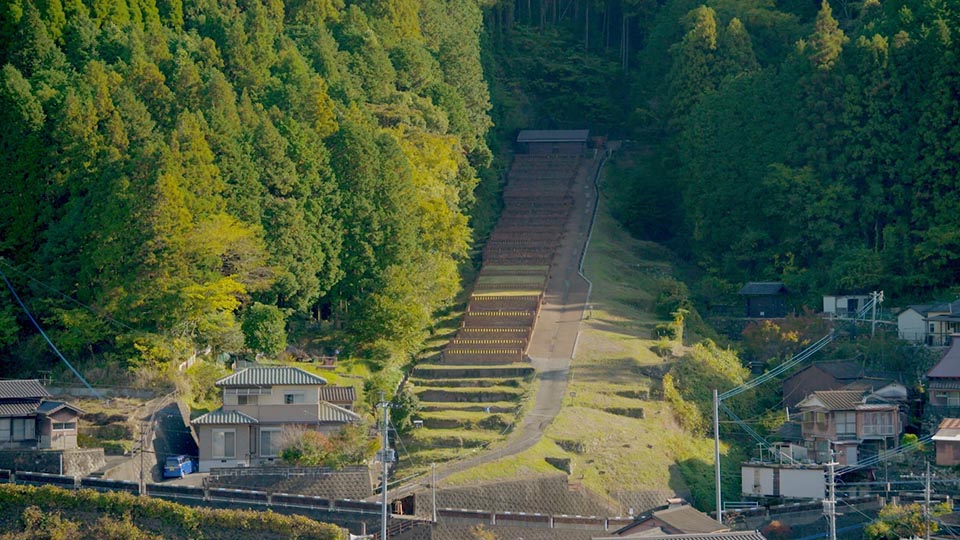
Bessho-yaki" is produced in the central area of Bessho-cho, Bessho town, which is called a "pottery village." The historical site, "Jamadare-yakata archaeological site," is located there. It is said to be a large ancient kiln site with a length of 160 meters and 33 kiln rooms, making it the second largest climbing kiln in the world. "Bessho-yaki" is known as a brand that achieved mass production domestically. A real "kurawan-ga" bowl, used for serving cakes and sake in Osaka, is still preserved. "Bessoh-yaki" continues to be sought after for its everyday utility and its variety-rich style that fits various scenes of life.
「波佐見焼」の産地、波佐見町の中でも中尾山地区は「陶郷」とも称される中心地である。その歴史の象徴たる遺跡、「中尾上登窯跡」は、長さ160メートルにおよび、窯室が33室あった窯跡で、世界第2位の巨大登り窯だったといわれる。「波佐見焼」は、国内向けの大量生産を実現したブランドとして知られる。大阪で餅や酒のサービスに使われ大量に消費された「くらわんか碗」の実物が残っている。「波佐見焼」は今も普段使いの良さを追求し、暮らしの様々な場面を想定したバラエティ豊かな作風で注目を浴びている。
View the original at Japan Search →A weapons statute that contains the most important art registry in the country. Article 2 defines a sword by measurement: a blade of fifteen centimetres or more for a sword, spear or naginata, five and a half for a dagger. Article 14 then carves out an exception. The prefectural board of education registers old firearms of value as art or antiques, and swords of value as art, on the basis of an appraisal by registration examiners appointed for their scholarly knowledge.
The cool part. A Japanese sword is lawful to own because it has been certified as art. Not because it was disarmed, not because it was licensed as a weapon. The judgement is made by the board of education, and Article 14 then requires the board to notify the prefectural public safety commission of what it has decided. The culture side rules, and the police are informed afterwards. Fail the appraisal and the same object becomes contraband.
Verify at e-Gov 法令検索 →Use it Two-colour foil on uncoated stock gets you most of this at production cost.
Description source: museum curator text, translated — not generated