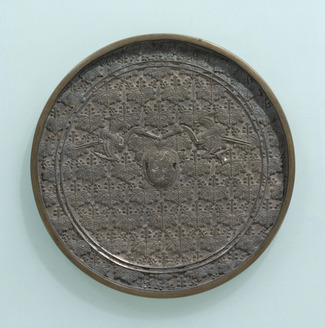
The entire set is displayed on a stand made of persimmon wood. The lid and base are decorated with gold lotus motifs, depicting seven such motifs. It belongs to the category of temple hangings called "Kamigata-e" and is a high-quality example, resembling the documents of Kyoto's Kamigata Temple. The large-sized piece includes a fine mirror and one other accessory. It is also a precious example of the production originals passed down through generations.
器全体を梨子地として、蓋表に金の平蒔絵で七つの桐紋を表わしている。いわゆる高台寺蒔絵に属するもので、京都の高台寺に伝わる調度に近似した優品である。大型で出来の良い鏡と一具をなしており、制作当初の内容品とともに伝来した貴重な作例でもある。
View the original at Japan Search →It protects not the buildings but the setting that holds them. Article 2 defines historic landscape as land where structures and remains of historical significance form a single whole with the surrounding natural environment, which is the legal way of saying the hills, the approaches and the sightlines. The ancient capitals are Kyoto, Nara and Kamakura, plus any other municipality added by Cabinet Order. The Minister of Land, Infrastructure, Transport and Tourism designates a preservation area; city planning then carves a Special Preservation District over its core, and inside that district an owner needs permission from the prefectural governor to build, to fell timber, or to change the shape of the ground.
The cool part. It legislates the view, and then it pays for it. Article 10 requires the prefecture to compensate an owner who suffers loss because permission was refused. Article 12 goes further: where refusal seriously impairs the use of the land, the owner can require the prefecture to buy it, at market value. So the state does not merely tell you what the horizon behind a temple may look like. It agrees to purchase the land rather than let the skyline change. Two more things worth knowing. The prefecture must physically sign the district boundary, and a landowner may not obstruct the sign without just cause. And the ministry holding the pen is Transport, not Culture.
Verify at e-Gov 法令検索 →Use it The border is the idea. Use it as an edge treatment and leave the centre empty.
Description source: museum curator text, translated — not generated