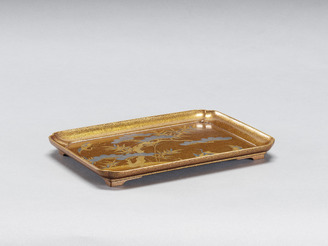
A bowl with incense burners like a koro and reiko. The dense lid is decorated with gold and silver inlay depicting pine, bamboo, crane, and turtle - common auspicious symbols. The lines of the inlay drawings on the surface are extremely fine, suggesting the skilled and practiced hand of the artisan. It is believed to be the work of a traditional and prestigious incense painting workshop.
香炉や重香合などの香の道具を乗せて用いる盆。密度の高い梨地に金や銀の平蒔絵で松竹、鶴亀、という定番の吉祥文を描く。蒔絵の上からさらに蒔絵を施す付描の線が極めて細く、迷いのない手慣れたようすで、松の葉、松の幹の肌、鶴の羽、筍などを描いている。大名道具を手がけるような正統な蒔絵工房による仕事と思われる
View the original at Japan Search →Article 1 states the purpose plainly: prevent trade in stolen goods, find them quickly, and speed the recovery of victims. Article 2 then defines a used article to include, in the same breath, art objects held for appreciation. Dealing in them requires a licence.
The cool part. Article 16 requires a dealer to record every transaction: the date, the item and quantity, its distinguishing features, and the address, name, occupation and age of the other party. Article 15 requires that a dealer who suspects an item is stolen report it to a police officer immediately. So the antique trade runs on a register the police may read, and a painting becomes a second-hand article the moment it has been used once.
Verify at e-Gov 法令検索 →Use it Palette for a single-colour run: one ink, heavy stock, nothing else on the sheet.
Description source: museum curator text, translated — not generated