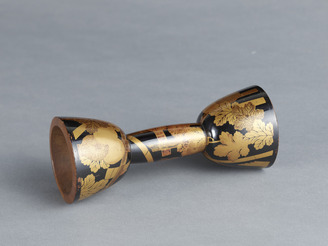
This part of a Japanese drum used for speaking in rhythm. At both ends, there is an iron hoop (kanawa) covered with leather which is struck and secured with ropes. The exterior is coated with black lacquer and gold powder is evenly applied. Techniques such as hiramaki-e (plain lacquer) and enamel decoration (enashi-ji) are used on the surface, as well as additional lacquer work (tsuke-gaki). A bamboo fence and chrysanthemums are depicted using these techniques. Inside the chibukuro (pouch) is calligraphy that cannot be read. It was a beloved item of a patron who was fond of Noh theatre.
能や狂言に用いる打楽器の胴部分。この両端に皮を張った鉄輪(かなわ)を当てがい、麻紐で縛って使う。外側を黒漆で塗り、金粉を平らに蒔きつける平蒔絵(ひらまきえ)やパール塗装風に蒔きつける絵梨地(えなしじ)、その上にさらに蒔絵をする付描(つけがき)などの技法を用いて、竹を組んだ垣根と菊を描く。乳袋(ちぶくろ)内に墨書があるが読めない。能を嗜んだ寄贈者の愛用品だった。
View the original at Japan Search →Japan implementing the 1970 UNESCO Convention. When a foreign state reports that cultural property has been stolen from an institution, the Ministry of Foreign Affairs notifies the education ministry, which designates the object as specified foreign cultural property, after consulting the trade ministry. Importing a designated object then requires approval under the foreign exchange and trade law.
The cool part. Article 6 quietly rewrites private law. Under the Civil Code a good-faith purchaser is normally secure against a recovery claim after two years. For designated stolen foreign cultural property, the victim may demand recovery from two years after the theft until ten years have passed. Buying in good faith does not settle the question for a decade, which is roughly how long it takes a stolen object to surface on a legitimate market.
Verify at e-Gov 法令検索 →Use it Palette for a single-colour run: one ink, heavy stock, nothing else on the sheet.
Description source: museum curator text, translated — not generated