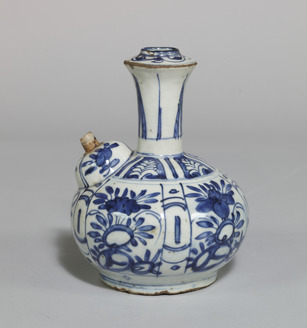
In the early modern period, around the 16th-17th centuries, a "Kendi" pot was made in the town of Kitanobu, which was known as Settsu no Michinokori. At this time, active external trade led to the creation of various types and forms of ceramics in response to export demands. These sturdy, clean, and beautiful ceramics were treasured throughout the world.
明時代、16~17世紀の頃に景徳鎮民窯で作られた「ケンディ」です。この頃、対外交易が活発したことにともなって、陶磁器では輸出先の需要に応じたさまざまの器種、器形のものが作られました。堅牢かつ清潔で、美しい磁器は世界各地で重宝されました。
View the original at Japan Search →Article 1 sets a purpose larger than preservation: to preserve cultural properties AND to make use of them, contributing to the cultural advancement of the people and to the progress of world culture. Article 4 turns that outward. An owner must recognise the object as a precious national asset, preserve it for the public, and make it public as far as possible. Ownership here carries a duty to show.
The cool part. "Living National Treasure" appears nowhere in the statute. Article 71 requires that when an Important Intangible Cultural Property is designated, the minister must also certify its holder or holding group. Japan does not register the pot, it registers the potter. Article 96 is the one that reaches ordinary people: if you uncover a shell mound, a dwelling site or a tumulus, you must leave it exactly as it is and notify the Commissioner for Cultural Affairs without delay, and the Commissioner can freeze the ground for up to three months.
Verify at e-Gov 法令検索 →Use it Two-colour foil on uncoated stock gets you most of this at production cost.
Description source: museum curator text, translated — not generated