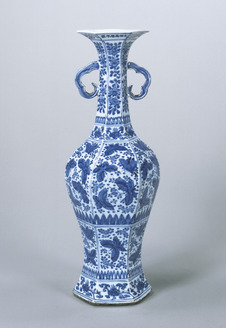
A soft blue flower design covers the entire surface, making it look like a butterfly and chrysanthemums are present. Traces of decorative attachments can be found on both sides of the ears. The overall impression is reminiscent of early Chinese porcelain made for export to Europe. The marking on the rim reads "Great Ming Tenporei Year of Production.
淡い青花で器面全体を覆うように蝶と花唐草があらわされています。左右の耳には遊環が取り付けられていた痕跡がみとめられます。総体の爽やかな印象は、清時代初頭に作られたヨーロッパ向けの青花磁器に通じるものがあります。口縁部「大明万暦年製」青花銘。
View the original at Japan Search →Article 3 tells libraries what to gather, and the list is wider than books: local materials, local administrative records, works of art, records and film. Article 3 also requires interlibrary lending, travelling collections and mobile libraries, so that the holdings move toward the reader rather than waiting.
The cool part. Article 17 is one sentence and admits nothing. A public library may not collect an admission fee, or any consideration whatsoever, for the use of library materials. Free is not a policy that a budget round can revisit, it is the statute. Article 26 is stranger still: the state and local authorities must not interfere in the work of a private library, and must not give it a subsidy. Independence is protected by withholding the money.
Verify at e-Gov 法令検索 →Use it A motif small enough to blind-deboss, which is where restraint actually shows.
Description source: museum curator text, translated — not generated