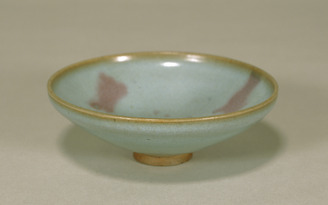
This tenmoku glaze contains a large amount of ferrous sulfate as an ingredient, giving it a translucent property that results in a clear blue color when fired in reduction. With the addition of a copper-containing glaze, irregular drips form, creating a high-class red-purple mottled effect that floats on the surface. This is unusual for ceramics of the Song dynasty, adding a lively and elegant atmosphere to it.
澱青釉は珪酸分の多い原料を加えた失透性の釉で、還元焔焼成によって澄んだ青色に呈色します。これに銅分を含んだ釉が不規則に流し掛けられ、上品な赤紫色の斑文となって浮かび上がっています。宋時代の陶磁器には珍しく、華やいだ気分をそなえています。
View the original at Japan Search →Japan implementing the 1970 UNESCO Convention. When a foreign state reports that cultural property has been stolen from an institution, the Ministry of Foreign Affairs notifies the education ministry, which designates the object as specified foreign cultural property, after consulting the trade ministry. Importing a designated object then requires approval under the foreign exchange and trade law.
The cool part. Article 6 quietly rewrites private law. Under the Civil Code a good-faith purchaser is normally secure against a recovery claim after two years. For designated stolen foreign cultural property, the victim may demand recovery from two years after the theft until ten years have passed. Buying in good faith does not settle the question for a decade, which is roughly how long it takes a stolen object to surface on a legitimate market.
Verify at e-Gov 法令検索 →Use it Take the ratio, not the picture. It sets a page better than a grid does.
Description source: museum curator text, translated — not generated