Quiet reading✦No ads, ever

✦Corporate brand & media services✦Made in Virginia Beach since 1997✦

Huang Goodman · Art Forgotten

Art Forgotten

Art from public museum collections. A mismatched real Japanese law, and some other factoids.

Every object, image and description comes from the museum's own catalogue record, and every object links to its original. Japanese records are machine-translated into English; the museum's Japanese is kept beside the translation because it is the authoritative form. Each law carries its official number and links to e-Gov 法令検索, the Japanese government's statute database.

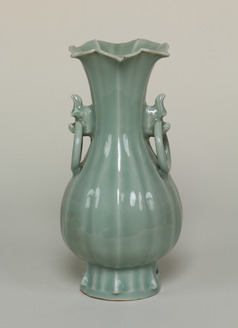
青磁桔梗口双耳花入
{青磁桔梗口双耳花入 · 中国・龍泉窯 · 元時代・13~14世紀 / Yuan dynasty, 13th–14th century · Japan Search · 国立国会図書館}
Aze clay figurine with a narrow waist and double earrings of azure hue. · China . Dragon Well Kiln --- This catalogue introduces the collection of Chinese ceramics from the Dragon Well Kiln. --- The Dragon Well Kiln, located in China, has a long history and is famous for its high-quality celadon and white porcelain wares. --- These ceramics are known for their elegant shapes, refined glazes, and subtle colors. --- The celadon pieces, in particular, exhibit a beautiful, slightly transparent green glaze that enhances their simple forms. --- The white porcelain wares, on the other hand, showcase a pure, milky white color and delicate decorative motifs. --- The Dragon Well Kiln's artisans have mastered the intricacies of their craft, resulting in a stunning array of functional and decorative ceramics. --- This collection showcases the versatility and timeless beauty of Chinese ceramics from the Dragon Well Kiln.

In the ancient period, a dragon well bowl made of clay with a green glaze was fired. The bottom part is shaped like a tsubo (matting), and the opening petals of the flower-like mouth are turned outward, giving it this form. According to records, this shape was classified as "Kikyauguchi (kiki yaw mouth)" during the Muromachi period. There is an example of a bronze one in the Korean new Anap-ri excavated materials, but green ware is rare.

元時代に焼かれた龍泉窯青磁の花入。下蕪形の胴部から鎬立ち、花弁がひらくように口が外反したこの形は、室町時代に「キキヤウグチ(桔梗口)」と分類されていたことが伝書に知られます。韓国新安沖引揚資料に青銅製の類例がありますが、青磁の伝世品は稀少です。

View the original at Japan Search →
The law
京都国際文化観光都市建設法
Kyoto International Culture Tourism City Construction Act
昭和二十五年法律第二百五十一号 · Act No. 251 of 1950

A national statute written for one city. Article 1 recites the beauty of Kyoto and its historically, culturally and artistically important position in the world, and gives two purposes: to raise international culture and serve the ideal of permanent world peace, and to contribute to the economic recovery of Japan. It was passed five years after the war ended.

The cool part. Article 3 lets Kyoto designate culture tourism preservation districts and, by ordinance, prohibit building, rebuilding, removal, changes to the shape of the land and the cutting of bamboo, trees and stone, with compensation for ordinary loss. Then Article 4 does something statutes almost never do. It places a duty on the mayor personally: in the spirit of local autonomy, and with the cooperation of residents, the mayor must engage in ceaseless activity to complete the city. Nara received its own Act, number 250, the day before.

Verify at e-Gov 法令検索 →

Use it Palette for a single-colour run: one ink, heavy stock, nothing else on the sheet.

Description source: museum curator text, translated — not generated