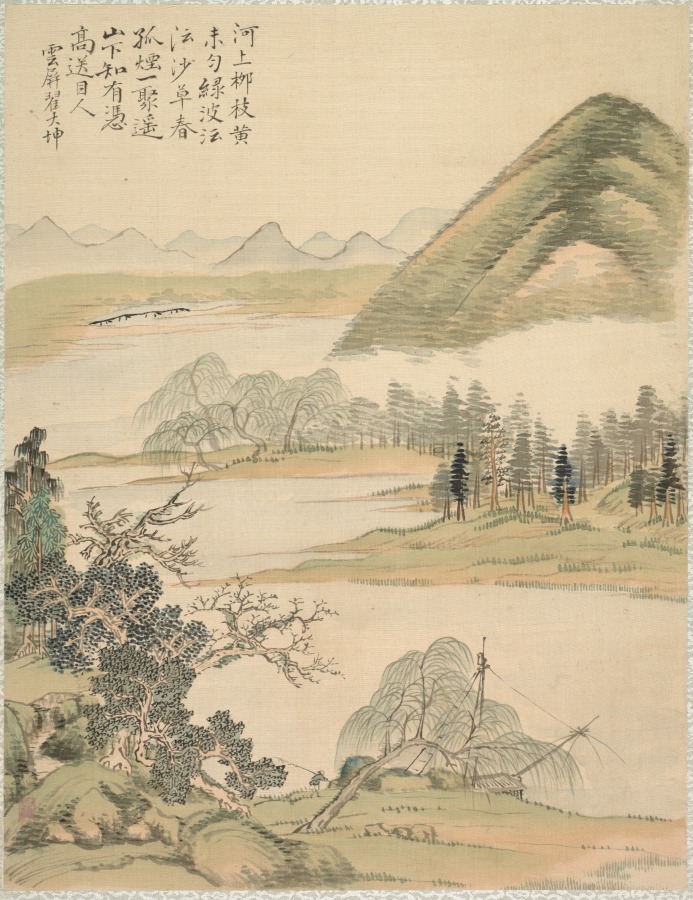
This album's title indicates that Tsubaki Chinzan created each landscape depicted within, inspired by the styling of Chinese artist Zhai Dakun (active 1730–1804). Alongside the painted scenes, he also reproduced the inscriptions found on Zhai Dakun's original works.
As the title of this album suggests, Tsubaki Chinzan painted each of the landscapes included in the album after interpretations of the styles of old masters by Chinese painter Zhai Dakun (翟大坤, active 1730–1804). In addition to the painted compositions, he also copied the inscriptions on Zhai Dakun's paintings.
View the original at Cleveland Museum of Art →Japan implementing the 1970 UNESCO Convention. When a foreign state reports that cultural property has been stolen from an institution, the Ministry of Foreign Affairs notifies the education ministry, which designates the object as specified foreign cultural property, after consulting the trade ministry. Importing a designated object then requires approval under the foreign exchange and trade law.
The cool part. Article 6 quietly rewrites private law. Under the Civil Code a good-faith purchaser is normally secure against a recovery claim after two years. For designated stolen foreign cultural property, the victim may demand recovery from two years after the theft until ten years have passed. Buying in good faith does not settle the question for a decade, which is roughly how long it takes a stolen object to surface on a legitimate market.
Verify at e-Gov 法令検索 →Use it A motif small enough to blind-deboss, which is where restraint actually shows.
Description source: museum curator text, translated — not generated