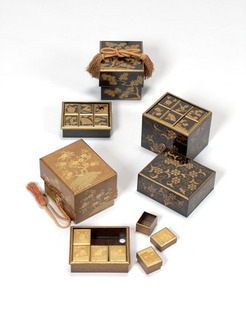
A tray decorated with simple lacquerwork, a mirror stand, a lacquer box for dipping dyes, an oil jar for grooming, a sink for incense, and a small box for combing, all had additional simple lacquerware accessories such as comb, water basin, and brush, in one piece. There is no specific crest that can be identified, but its classical shape and the wealth of lacquerware suggest that it might have been a part of the wedding preparations for a samurai house or a daimyo's (feudal lord's) household.
高蒔絵で飾られた鏡台、鏡箱、鉄漿の染料を入れる附子箱、整髪用の油桶、香を入れる沈箱、櫛をしまう小櫛箱、鉄漿道具を入れる歯黒箱に、簡易な蒔絵の鬢水入、刷毛、櫛などが添えられた一具。特定の家を割り出せるような家紋がないが、規格に則った古典的な形や蒔絵の豪華さから、公家か大名家の婚礼調度の一部と考えられる。
View the original at Japan Search →Article 1 describes the Ainu as the indigenous people of the northern part of the Japanese archipelago and of Hokkaido in particular, and cites international circumstances concerning indigenous peoples as a reason for acting. It requires the government to set a basic policy, and lets municipalities draw up regional plans for approval by the Prime Minister.
The cool part. The definition in Article 2 is the part to sit with. Ainu culture means the Ainu language, and the ways of living, music, dance, crafts and other cultural products inherited among the Ainu, and cultural products developed from these. That final clause refuses to freeze the culture at a date, and treats what is made next as equally the thing being protected. The Act then reaches into trademark law, reducing or waiving registration fees for regional collective trademarks used by approved projects.
Verify at e-Gov 法令検索 →Use it Two-colour foil on uncoated stock gets you most of this at production cost.
Description source: museum curator text, translated — not generated