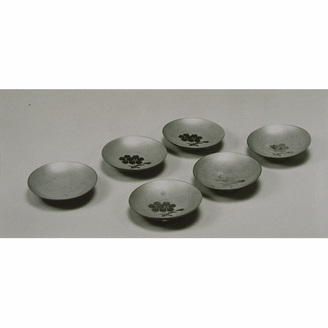
This bowl serves as a sample of the production process of lacquerware. It is recorded in our registry with the name "Ichiasan." It is believed to be the work of Ichiyo Cawagawa (born in 1830, died in 1910), who was appointed as an imperial artist during the Meiji period (1896). During the Meiji era, art schools were established, the Japan Lacquer Association was founded, and this museum was opened as the Imperial Museum in Kyoto. The recognition of lacquerwork and lacquer painting as "art," and the status of lacquer painters and lacquer artists as "artists," were the social systems and consciousness changes that led to the emergence of such items.
蒔絵の制作工程を示す標本としての盃。当館の台帳に「一朝」とある。明治二十九年(一八九六)には帝室技芸員に任命された川之邊一朝(一八三〇~一九一〇)の仕事であろうか。明治時代に入ると美術学校が整備され、日本漆工会が設立し、当館も帝国京都博物館として開館した。漆塗りや蒔絵が「芸術」となり塗師や蒔絵師が「作家」となるような社会制度の整備や意識変革の課程で、このような品が登場したものと言えよう。
View the original at Japan Search →Article 1 states the purpose plainly: prevent trade in stolen goods, find them quickly, and speed the recovery of victims. Article 2 then defines a used article to include, in the same breath, art objects held for appreciation. Dealing in them requires a licence.
The cool part. Article 16 requires a dealer to record every transaction: the date, the item and quantity, its distinguishing features, and the address, name, occupation and age of the other party. Article 15 requires that a dealer who suspects an item is stolen report it to a police officer immediately. So the antique trade runs on a register the police may read, and a painting becomes a second-hand article the moment it has been used once.
Verify at e-Gov 法令検索 →Use it Take the ratio, not the picture. It sets a page better than a grid does.
Description source: museum curator text, translated — not generated