Quiet reading✦No ads, ever

✦Corporate brand & media services✦Made in Virginia Beach since 1997✦

Huang Goodman · Art Forgotten

Art Forgotten

Art from public museum collections. A mismatched real Japanese law, and some other factoids.

Every object, image and description comes from the museum's own catalogue record, and every object links to its original. Japanese records are machine-translated into English; the museum's Japanese is kept beside the translation because it is the authoritative form. Each law carries its official number and links to e-Gov 法令検索, the Japanese government's statute database.

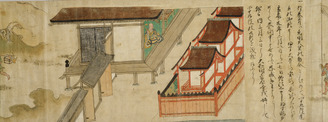
八幡大菩薩縁起絵巻
{八幡大菩薩縁起絵巻 · 東京国立博物館 · 南北朝時代・14世紀 / Nanbokuchō period, 14th century · Japan Search · 国立国会図書館}
Title Scroll of the Connection of Hachiman Bodhisattva Description: This scroll painting depicts the connection or interaction between Hachiman Bodhisattva and various other beings. The scene is visually rich and dynamic, with Hachiman Bodhisattva at the center, surrounded by a multitude of figures. The main figure, Hachiman Bodhisattva, is shown in a robust and powerful posture, with his right hand extended in a protective gesture and his left hand holding a lotus flower. His fierce and compassionate demeanor is emphasized by the intricate details of his attire and the intense expressions of the other beings in the scene. Around Hachiman Bodhisattva, there are various mythical and human figures, each engaged in a unique interaction with him. Some offer him gifts or pay homage, while others seek his protection or guidance. The vibrant colors and bold brushstrokes of the painting bring these figures to life, creating a lively and engaging composition. The scroll is an impressive work of art, demonstrating the skill and creativity of the artist. It is a testament to the enduring significance of Hachiman Bodhisattva in Japanese culture and spirituality. Size: Approximately 110 cm x 41 cm (43 inches x 16 inches) Materials: Painted on silk with natural pigments. Condition: The scroll is in good condition, with some minor wear consistent with its age. There are no significant tears or losses. Provenance: This scroll was once part of a private collection in Japan, and has been carefully preserved for generations. It is now offered for sale to art collectors and institutions. Background: Hachiman Bodhisattva is a popular deity in Japanese Buddhism, known for his protective and benevolent powers. He is often depicted as a fierce warrior, armed with a bow and arrow

Catalogue text summary: This catalogue text describes a picture scroll depicting the reverence and worship of Hachiman God (Hachiman Bosatsu). The first part tells the story of the ancestor of the Seppuku ritual, who prayed to Hachiman God for safe passage to China. The second part describes how the founder of many temples, who received an imperial decree from Emperor Meio, prayed to Hachiman God for their temple building endeavors.

八幡神(八幡大菩薩)の霊験と、人びとの崇敬を描いた絵巻の断簡。第一段は修験道の祖・役行者が中国への渡航を八幡神に祈ったという話。第二段は元明天皇より勅命を受けた行基菩薩が、多くの寺院建立のため八幡神に祈りをささげたという話です。

View the original at Japan Search →
The law
景観法
Landscape Act
平成十六年法律第百十号 · Act No. 110 of 2004

Article 1 states the aim as a beautiful and dignified national land, and it covers not only cities but farming, mountain and fishing villages. Inside a landscape planning area, Article 16 requires advance notification of new building, extension, rebuilding, relocation, and any repair or alteration that changes the exterior. Landscape Districts go further and impose direct restrictions on the form and design of buildings.

The cool part. Read Article 16 to the end of the sentence. A change of colour is listed alongside new construction as an act you must notify. Repainting your building is, in law, the same category of event as putting up a new one. This is the machinery behind the muted shopfronts of Kyoto. The brown coffee-shop sign is not a marketing choice, it is compliance.

Verify at e-Gov 法令検索 →

Use it Palette for a single-colour run: one ink, heavy stock, nothing else on the sheet.

Description source: museum curator text, translated — not generated