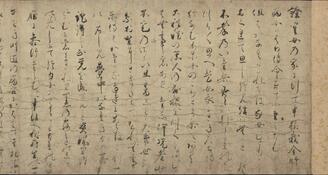
A monk named Chissho of Miidera temple fell ill. His disciple Shokoku took on the role of the master, caring for Chissho's illness. This story is depicted in various ways as showing compassion from the Buddha Amida towards Shokoku. The Buddha Amida's prayers and his descent into the underworld are among these extraordinary stories.
三井寺の智興という僧が病気になったとき、証空という弟子が師匠の身代わりとしてその病を引き受けると、これを哀れんだ不動明王が証空を救うという物語。安倍晴明の祈祷や不動明王が縛られ冥界に赴くなど、不動明王のご利益を奇想天外な物語で描きます。 みいでら/ちこう/しょうくう/あべのせいめい/きとう/めいかい
View the original at Japan Search →Article 1 describes the Ainu as the indigenous people of the northern part of the Japanese archipelago and of Hokkaido in particular, and cites international circumstances concerning indigenous peoples as a reason for acting. It requires the government to set a basic policy, and lets municipalities draw up regional plans for approval by the Prime Minister.
The cool part. The definition in Article 2 is the part to sit with. Ainu culture means the Ainu language, and the ways of living, music, dance, crafts and other cultural products inherited among the Ainu, and cultural products developed from these. That final clause refuses to freeze the culture at a date, and treats what is made next as equally the thing being protected. The Act then reaches into trademark law, reducing or waiving registration fees for regional collective trademarks used by approved projects.
Verify at e-Gov 法令検索 →Use it Palette for a single-colour run: one ink, heavy stock, nothing else on the sheet.
Description source: museum curator text, translated — not generated