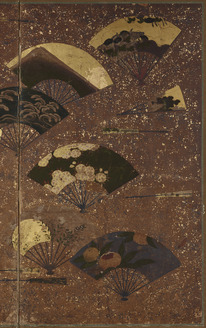
Between folded fans, pictures of seasonal landscapes and flowers are pasted, giving an impression of being scattered on a screen. The cherry blossoms and morning scenes have volume, with white powder (pigment) piled up. The bold close-up technique is characteristic of Soseki in producing numerous fan paintings. Rubbing: Gofun (130820_h082)
閉じた扇を交えて、季節の風物を描いた扇をあたかも屏風の上に散らしたかのように貼り交ぜた作品。朝顔の垣や桜の花は、胡粉(白色)を盛り上げ、立体的に描いている。対象を大胆にクローズアップする手法は、扇絵を数多く制作した宗達の特色である。ルビ:ごふん(130820_h082)
View the original at Japan Search →Unusually for a Japanese statute it opens with a preamble, which states that finding joy in creating culture and living among it is an unchanging wish of people, and that culture contributes to world peace. Article 2 then sets the principles: the autonomy of those who make culture must be fully respected, and their creativity, standing and capacity considered.
The cool part. Article 2, paragraph 3 is the line worth reading twice. It says that creating and receiving culture is a right people are born with, and requires an environment in which citizens can appreciate, participate and create regardless of age, disability, economic situation, or the area they live in. Four barriers named in statute, one of which is your postcode. It puts the arts in the same grammatical register as infrastructure. Not a subsidy argued for each year, a standing obligation.
Verify at e-Gov 法令検索 →Use it The border is the idea. Use it as an edge treatment and leave the centre empty.
Description source: museum curator text, translated — not generated