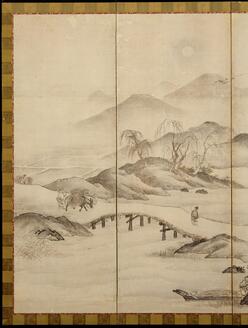
This scroll painting is titled "Four Seasons of Farming" and depicts various scenes of agricultural work in spring, summer, autumn, and winter. The powerful figure owned this piece to reflect upon his own position and the labor of the people, as depicted on the left to right. The painting includes motifs of farming such as plowing with oxen, sowing seeds, cultivating fields, autumn harvest, and threshing. The people performing these tasks are shown in the foreground, while buildings, trees, and other elements are located at the edges. The central area features a distant mountain range and vast open space. The ink colors gradually lighten from foreground to background, and the motifs gradually overlap, drawing the viewer's gaze deeper into the painting. The expressions of the laborers are calm and somewhat humorous. This work portrays the ideal image of the powerful figure effectively managing his territory, enabling the farmers to work diligently. However, it appears that this charming rural landscape was created primarily for the benefit of the powerful figure and not for the enjoyment of the depicted farmers themselves.
種まき、田植え、秋の収穫など春夏秋冬の農作業の様子を描いた絵を四季耕作図という。権力者は民の苦労を偲び、自らを戒めるために所有した。守景は、多くの耕作図を描いたが、本作は、代掻き(しろかき)、脱穀などの情景とともに、養蚕(ようさん)の作業も描かれている。 (2005/09/13_h07) この作品は、自然の情景の中に、春夏秋冬の農作業の様子を描いた屏風です。牛を使った田起こし、種まき、田植え、秋の収穫、脱穀など、春に始まる一年の農作業を行う人びとが、左から右へと描かれています。建物や木々、田んぼなどのモチーフは左右の端に寄せて描かれ、中央には遠い山並みと広々とした空間があります。墨の色は手前から奥へとだんだん淡くなり、モチーフが少しずつ重なり合って描写されることで、視線が画面の奥へ奥へと導かれます。 それぞれの作業に励んでいる人びとの表情は穏やかで、どこかユーモラスにも見えます。 権力者が正しく領地を治めることで、領民も健やかに農耕に勤しむことができる、という理想の姿を描いたものです。一見のどかな田園風景を描いたこの屏風も、あくまで支配者のためのものであり、描かれている庶民自身がこの絵を楽しむというわけではなかったようです。
View the original at Japan Search →A national statute written for one city. Article 1 recites the beauty of Kyoto and its historically, culturally and artistically important position in the world, and gives two purposes: to raise international culture and serve the ideal of permanent world peace, and to contribute to the economic recovery of Japan. It was passed five years after the war ended.
The cool part. Article 3 lets Kyoto designate culture tourism preservation districts and, by ordinance, prohibit building, rebuilding, removal, changes to the shape of the land and the cutting of bamboo, trees and stone, with compensation for ordinary loss. Then Article 4 does something statutes almost never do. It places a duty on the mayor personally: in the spirit of local autonomy, and with the cooperation of residents, the mayor must engage in ceaseless activity to complete the city. Nara received its own Act, number 250, the day before.
Verify at e-Gov 法令検索 →Use it A motif small enough to blind-deboss, which is where restraint actually shows.
Description source: museum curator text, translated — not generated