Huang Goodman · Art Forgotten

Art Forgotten

Art from public museum collections. A mismatched real Japanese law, and some other factoids.

Every object, image and description comes from the museum's own catalogue record, and every object links to its original. Japanese records are machine-translated into English; the museum's Japanese is kept beside the translation because it is the authoritative form. Each law carries its official number and links to e-Gov 法令検索, the Japanese government's statute database.

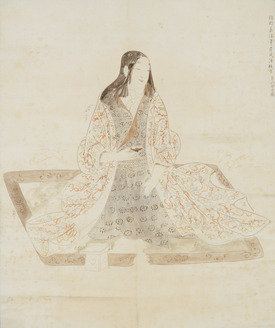
花下遊楽図屏風抜写
{花下遊楽図屏風抜写 · 溝口禎次郎筆 · 明治時代・20世紀 / Meiji era, 20th century · Japan Search · 国立国会図書館}
Scroll screen painting 'Flower under the Moon' by Kitao · Rogoku Hidejirō Calligraphy This catalog introduces the calligraphy of Rogoku Hidejirō. Each piece showcases the artist's mastery of the traditional Japanese brush technique, with elegant strokes and precise control. From the refined curves to the bold lines, Rogoku Hidejirō's calligraphy exudes a timeless beauty, inviting viewers to contemplate the aesthetic principles of balance, harmony, and grace. Throughout the catalog, we can observe the artist's dedication to his craft, as he skillfully navigates the intricacies of various scripts, each with its unique character and expressive potential. The catalog also includes an insightful analysis of Rogoku Hidejirō's calligraphic style, exploring its influences, historical context, and artistic development. In addition, the catalog features high-quality images of the artist's works, allowing us to appreciate their intricacies and nuances up close. Together, these pages offer a captivating exploration of Rogoku Hidejirō's calligraphy, inviting us to delve into the world of this master artist and appreciate the beauty and depth of his creations.

The part on the right of the screen painting called 'Byobu-e Extracted from the Collection of Longinus Fukuda at Kamigano,' is recognizable as a copy of the Flower Viewing Scroll screen painting that was burnt in Taisho 12th year. The person who made the copy worked as the head of the art section at the Imperial Museum in Tokyo and took a cane from Tokyo Art School. It is likely that this painting was created for the Special Exhibition of the Meiji 44th year.

「狩野長信筆屏風絵抜写 原六郎蔵」と記されており、大正12年に焼失した花下遊楽図屏風の右隻の部分模写とわかる。模写した溝口は東京美術学校で教鞭を取り、帝室博物館の美術課長を務めた人物。本図は明治四十四年特別展覧会の折に写された可能性が高い。

View the original at Japan Search →
The law
京都国際文化観光都市建設法
Kyoto International Culture Tourism City Construction Act
昭和二十五年法律第二百五十一号 · Act No. 251 of 1950

A national statute written for one city. Article 1 recites the beauty of Kyoto and its historically, culturally and artistically important position in the world, and gives two purposes: to raise international culture and serve the ideal of permanent world peace, and to contribute to the economic recovery of Japan. It was passed five years after the war ended.

The cool part. Article 3 lets Kyoto designate culture tourism preservation districts and, by ordinance, prohibit building, rebuilding, removal, changes to the shape of the land and the cutting of bamboo, trees and stone, with compensation for ordinary loss. Then Article 4 does something statutes almost never do. It places a duty on the mayor personally: in the spirit of local autonomy, and with the cooperation of residents, the mayor must engage in ceaseless activity to complete the city. Nara received its own Act, number 250, the day before.

Verify at e-Gov 法令検索 →

Use it Take the ratio, not the picture. It sets a page better than a grid does.

Description source: museum curator text, translated — not generated