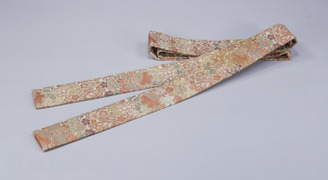
The obi, used to fasten a waist-wrapping, is mainly made of silk. Its width is typically narrower, around 8 to 10 centimeters. Due to the thick core at both ends, when fastened at the back, the obi puffs out on the sides like arms. Therefore, when wrapped around the waist through the sleeves of the obi, it assumes a spread-out, feather-like appearance.
腰巻姿に使われる提帯は主として錦で作られ帯の幅は通常より狭く8~10㎝あまりである。その両端に腕の太さくらいの芯が入るため、背中で結ぶと左右にピンと腕のようにのびる。そこに腰巻の両袖を通して腰に巻くため、まるで羽根を広げたような姿となる。
View the original at Japan Search →Unusually for a Japanese statute it opens with a preamble, which states that finding joy in creating culture and living among it is an unchanging wish of people, and that culture contributes to world peace. Article 2 then sets the principles: the autonomy of those who make culture must be fully respected, and their creativity, standing and capacity considered.
The cool part. Article 2, paragraph 3 is the line worth reading twice. It says that creating and receiving culture is a right people are born with, and requires an environment in which citizens can appreciate, participate and create regardless of age, disability, economic situation, or the area they live in. Four barriers named in statute, one of which is your postcode. It puts the arts in the same grammatical register as infrastructure. Not a subsidy argued for each year, a standing obligation.
Verify at e-Gov 法令検索 →Use it A motif small enough to blind-deboss, which is where restraint actually shows.
Description source: museum curator text, translated — not generated