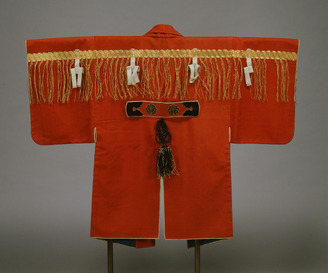
During the Edo period, firefighting at townhouses was handled by the local firefighting team. However, for the Matsuda family, this importance was reflected in the establishment of a permanent firefighting team headquartered at Edo Castle, as well as their involvement in firefighting in other major territories of the shogunate. Firefighting costumes of daimyo (feudal lords) often featured fabric similar to that used in military uniforms.
江戸時代、町火消が町屋の火災消火にあたったのに対し、武家については、その重要度を反映して、旗本からなる定火消が江戸城、また大名がその他の幕府主要地域の消火に当たった。大名火消の装束は、それゆえ陣羽織と共通する生地を用いたものが多い。
View the original at Japan Search →Article 3 tells libraries what to gather, and the list is wider than books: local materials, local administrative records, works of art, records and film. Article 3 also requires interlibrary lending, travelling collections and mobile libraries, so that the holdings move toward the reader rather than waiting.
The cool part. Article 17 is one sentence and admits nothing. A public library may not collect an admission fee, or any consideration whatsoever, for the use of library materials. Free is not a policy that a budget round can revisit, it is the statute. Article 26 is stranger still: the state and local authorities must not interfere in the work of a private library, and must not give it a subsidy. Independence is protected by withholding the money.
Verify at e-Gov 法令検索 →Use it Take the ratio, not the picture. It sets a page better than a grid does.
Description source: museum curator text, translated — not generated