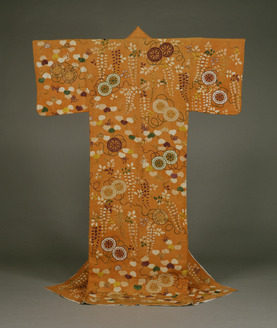
Cotton summer kimono with simple design is called "single-wear" in Japanese. The crease of cotton is a type of fine, vertical pleats (chirimen), which is favored in summer clothing due to the pleasant sensation of skin contact even when sweating. Designs featuring sunflowers and wisteria, or a deer fetus, are illustrated through embroidery (shishu), and a design with a procession of Genji carriages in between is typical for a Japanese lady's small sleeve.
絹の単仕立の夏の着物を単衣と称する。絹縮は縦に皺(しぼ)を細かく出した縮緬(ちりめん)の一種で、汗ばむ季節でも肌触りがいいことから夏の衣料に好まれた。葵と藤を白上げや鹿の子絞り、刺繍(ししゅう)で総模様に表し、源氏車を間に配したデザインは武家女性が着用する小袖の典型。
View the original at Japan Search →A national statute written for one city. Article 1 recites the beauty of Kyoto and its historically, culturally and artistically important position in the world, and gives two purposes: to raise international culture and serve the ideal of permanent world peace, and to contribute to the economic recovery of Japan. It was passed five years after the war ended.
The cool part. Article 3 lets Kyoto designate culture tourism preservation districts and, by ordinance, prohibit building, rebuilding, removal, changes to the shape of the land and the cutting of bamboo, trees and stone, with compensation for ordinary loss. Then Article 4 does something statutes almost never do. It places a duty on the mayor personally: in the spirit of local autonomy, and with the cooperation of residents, the mayor must engage in ceaseless activity to complete the city. Nara received its own Act, number 250, the day before.
Verify at e-Gov 法令検索 →Use it Two-colour foil on uncoated stock gets you most of this at production cost.
Description source: museum curator text, translated — not generated