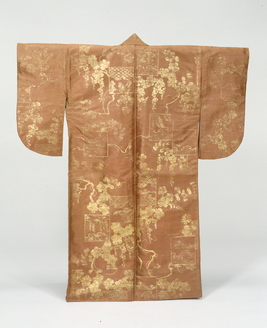
This work, titled Nerikuki, is displayed on a purple-tinted (Nerikuki) ground together with grape trees and colored papers, using gold foil technique. In terms of the sophistication of the technique and the elegance of the clothing depicted, it holds the highest rank among existing gold foil works.
紫練緯(ねりぬき)地に葡萄の立木と色紙を金摺箔で表すこの作品は、子方(こかた)の装束ながら技術が秀逸であること、及び衣装が格調高く優雅であることにおいて現存する摺箔の作品中最高水準に位置する一領である。
View the original at Japan Search →A national statute written for one city. Article 1 recites the beauty of Kyoto and its historically, culturally and artistically important position in the world, and gives two purposes: to raise international culture and serve the ideal of permanent world peace, and to contribute to the economic recovery of Japan. It was passed five years after the war ended.
The cool part. Article 3 lets Kyoto designate culture tourism preservation districts and, by ordinance, prohibit building, rebuilding, removal, changes to the shape of the land and the cutting of bamboo, trees and stone, with compensation for ordinary loss. Then Article 4 does something statutes almost never do. It places a duty on the mayor personally: in the spirit of local autonomy, and with the cooperation of residents, the mayor must engage in ceaseless activity to complete the city. Nara received its own Act, number 250, the day before.
Verify at e-Gov 法令検索 →Use it Take the ratio, not the picture. It sets a page better than a grid does.
Description source: museum curator text, translated — not generated