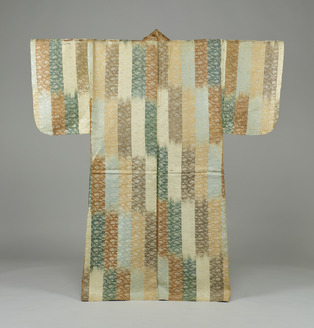
It is a valuable piece. The satin (tatemi) material is dyed in six colors: indigo, red, light green, pale tea, purple, and white. The adjacent vertical stripes of color are shifted one by one in short scroll form, and it serves as a masterful artist in alternating sections. The crest on the upper part is a double peony, crane and bamboo design.
名品である。経糸(たていと)を紺・紅・浅葱・淡茶・紫・白の6色に染め分け、隣り合う縦縞の色を1色ずつずらしながら短冊形に色を織り出し、しかも全体としては段替わりの意匠となっている。上紋には名物裂(めいぶつぎれ)の模様である二重蔓牡丹唐草紋が織り出される。
View the original at Japan Search →Article 1 states the purpose plainly: prevent trade in stolen goods, find them quickly, and speed the recovery of victims. Article 2 then defines a used article to include, in the same breath, art objects held for appreciation. Dealing in them requires a licence.
The cool part. Article 16 requires a dealer to record every transaction: the date, the item and quantity, its distinguishing features, and the address, name, occupation and age of the other party. Article 15 requires that a dealer who suspects an item is stolen report it to a police officer immediately. So the antique trade runs on a register the police may read, and a painting becomes a second-hand article the moment it has been used once.
Verify at e-Gov 法令検索 →Use it Take the ratio, not the picture. It sets a page better than a grid does.
Description source: museum curator text, translated — not generated