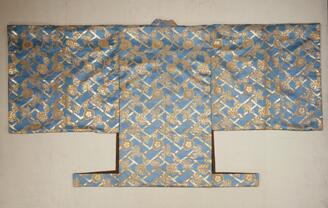
The robe of armor (hobaki) is set up with wide sleeves, and is adorned with brilliant fabric such as gold lacquer (kinran) and silk (nishiki). On both sides, there are sash-like garments (ran) worn. The front and back are connected. On the stage, armor (yoroi) is not worn even in battle scenes. The pottery patterns favored by samurai are suitable for the armor-like law wearing.
法被は広袖に仕立てられた脇の開いた装束で、金襴(きんらん)や錦(にしき)など煌びやかな織物で仕立てられる。両脇に帯状の襴(らん)をつけ、前身頃と後身頃とをつなぐ。舞台では合戦の場面でも鎧(よろい)は着用しない。武家で好まれた瓢箪の模様は、武将役が鎧の代わりに着用する法被にふさわしい。
View the original at Japan Search →Article 1 states the aim as a beautiful and dignified national land, and it covers not only cities but farming, mountain and fishing villages. Inside a landscape planning area, Article 16 requires advance notification of new building, extension, rebuilding, relocation, and any repair or alteration that changes the exterior. Landscape Districts go further and impose direct restrictions on the form and design of buildings.
The cool part. Read Article 16 to the end of the sentence. A change of colour is listed alongside new construction as an act you must notify. Repainting your building is, in law, the same category of event as putting up a new one. This is the machinery behind the muted shopfronts of Kyoto. The brown coffee-shop sign is not a marketing choice, it is compliance.
Verify at e-Gov 法令検索 →Use it A motif small enough to blind-deboss, which is where restraint actually shows.
Description source: museum curator text, translated — not generated