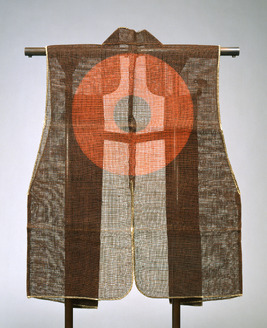
Originally, this fabric was used on top of armor in the army, but during the Edo period, its usage transformed into military attire representing soldiers. It is coarsely woven with hemp cloth, and persimmon tannin is applied, creating a pattern of donut-shaped snake eyes. The collar features "Silk of the Shisa People," a type of Chinese silk that was imported from the northern regions.
本来は陣中で鎧の上に着用する羽織でしたが、江戸時代にはその用途は形骸化し武士を象徴する服飾となりました。粗く平織にした麻地に柿渋を塗り、丹でドーナツ型の蛇の目模様を型染にします。衿には「蝦夷錦」と称される北方まわりで輸入された中国産の錦が用いられました。
View the original at Japan Search →Article 1 describes the Ainu as the indigenous people of the northern part of the Japanese archipelago and of Hokkaido in particular, and cites international circumstances concerning indigenous peoples as a reason for acting. It requires the government to set a basic policy, and lets municipalities draw up regional plans for approval by the Prime Minister.
The cool part. The definition in Article 2 is the part to sit with. Ainu culture means the Ainu language, and the ways of living, music, dance, crafts and other cultural products inherited among the Ainu, and cultural products developed from these. That final clause refuses to freeze the culture at a date, and treats what is made next as equally the thing being protected. The Act then reaches into trademark law, reducing or waiving registration fees for regional collective trademarks used by approved projects.
Verify at e-Gov 法令検索 →Use it The border is the idea. Use it as an edge treatment and leave the centre empty.
Description source: museum curator text, translated — not generated