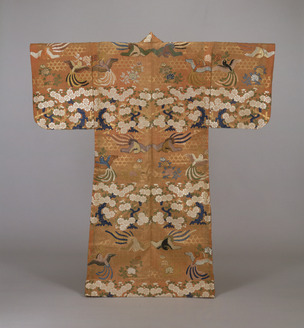
Tangoku refers to "Japanese textiles," but in reality, it began to be woven during the late Muromachi period. The term "Tangoku" means Chinese-style textiles. In the middle Edo period, gold threads were woven into it and became popular. Young female roles often wore Tangoku with a lot of red color, which was called "Iro-iri" (red entering).
唐織とは「中国の織物」のことだが、実際は室町時代後期より織られ始めた日本の織物で、中国風の織物、という意味である。江戸時代中期には金糸を織り込んだ「金唐織」が主流となった。若い女性役が着用する唐織には紅色が多く用いられ「紅(いろ)入(いり)」と称された。
View the original at Japan Search →Article 1 gives three grounds for regulating a sign: forming good landscape, maintaining scenic character, and preventing danger to the public. Article 3 then lets a prefecture prohibit outdoor advertising outright, by ordinance, in named categories of place.
The cool part. Read the list in Article 3 and it stops being an advertising law. The places where signage can be banned include landscape districts, scenic districts, preservation districts for groups of traditional buildings, the surroundings of designated Important Cultural Properties, and historic sites, places of scenic beauty and natural monuments. The statute protects the view by removing the sentences written across it.
Verify at e-Gov 法令検索 →Use it Take the ratio, not the picture. It sets a page better than a grid does.
Description source: museum curator text, translated — not generated